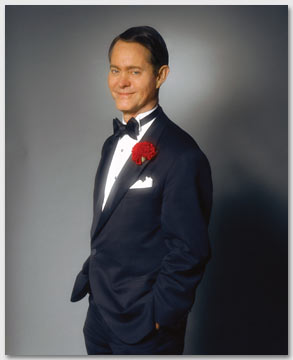
Update: Spencer Leigh's Could This Be Magic? has now been been published as an e-book and is available worldwide from UK amazon here and US amazon here.
This is to let readers know that the DJ and author Spencer Leigh has written a book about doo wop which will be published this Friday, 17th April.
The current crisis means that it will be issued initially in e-book form, although it's hoped a hard copy will be available later. I recently read an advance copy of the book, which is entitled Could It Be Magic?, and chatted to Spencer Leigh about it.
14 April 2020
New book about doo wop now available (Could This Be Magic? by Spencer Leigh)
1 February 2020
Happy Birthday Spencer Leigh
A couple of weeks ago, during an interview with Joe Brown, Spencer Leigh let slip that he would be 75 on the first of February, the date of Brown's gig at the Liverpool Phil - which Spencer will, of course, be attending.
Like Joe Brown, Spencer's longrunning On the Beat show on BBC Radio Merseyside is still on the go, and long may it continue. I've really grown to enjoy his wide-ranging musical knowledge and his unshowy delivery. Performers seem to open up to him because they know that he knows his stuff and he cares about it. He has written books about various aspects of pop music: he has a particular interest in Merseybeat and the Beatles but his knowledge of rock'n'roll and 60s/70s pop seems pretty far-reaching.
His, for example, was the only UK obituary of Pookie Hudson (in the Independent) which gave any indication of familiarity with the Spaniels' biography. And during a Steve Cropper interview he was able to make the leap between the Beatles' 12 Bar Original and Green (not Glass) Onions. Not to mention a discussion with (I think) one of the Searchers about just what sort of kiss it was in Sweets For My Sweet which "thrilled me so." Or pointing out the pinch from the Diamonds' version of Little Darling at the end of the Beatles' Misery. All in one episode.
The programme isn't parochial, even though he will announce local gigs and his knowledge of Merseybeat and the Beatles will come to the fore. The scope of the programme is much wider than that. If you could weep when you think of the amount of time you have spent in the past listening to interviews by DJs or TV figures who haven't done their homework or simply don't have that much invested in the interaction then in a quiet sort of way Spencer will be a revelation because he does care - and he can make the musical connections which can illuminate things for the listener. During that recent Joe Brown interview there was an anecdote about George Harrison subjecting Scotty Moore to an evening of George Formby songs, to Moore's obvious discomfiture. Who else but Spencer would have pointed out that Pete Seeger was a Formby fan?
There is, in short, a foundation of wideranging knowledge which means that his interviews are more rewarding than in many other cases, and you can hear it in the performers' response to his questions: you can hear them relaxing and opening up, because it sounds like they're being talked to by a human being who has actually enjoyed their music, not a Radio Personality. Tommy Hunt mentioned during an interview that when he heard Spencer's voice on the phone "I knew he was gonna be nice."
When I began writing this blog I thought I would only write about doo wop. But other music I'd grown up listening to crept in, and of course it was all connected. Why not just celebrate it all? Which is what I've tried to do. And what I get most strongly from Spencer's show is that he too thinks all this, the broad sweep of popular music, is important. On his personal website he says of On the Beat:
My radio programmes contain many interviews with a wide variety of people from the world of pop, rock, country, soul ... everything in fact. I hope to provide an insight to their music, and give the listener an opportunity to hear the unusual as well as the familiar.
Well, for my money he does - frequently. And if you haven't heard this little gem of a show, you can listen to recent episodes here. The Joe Brown episode is here. Spencer's own website, where you can read articles, buy his books, and see a list of past On the Beat guests, is here.
On the Beat is broadcast on BBC Radio Merseyside every Sunday 7.00-8.00pm.
21 August 2017
Tommy Hunt on Spencer Leigh's On the Beat, BBC Radio Merseyside
Have just heard, and strongly recommend, a fascinating interview with Tommy Hunt, one of the two last surviving members of the Flamingos from their glory days, on Spencer Leigh's ever-dependable On the Beat programme on BBC Radio Merseyside. It was broadcast yesterday and will be available on BBC iplayer for another 29 days; it's radio rather than television so I believe US readers can also access it; the iplayer page is here.
As ever, Spencer's wide-ranging musical knowledge helps him draw the best out of his subject, a man who is an important part of several strands of music history - and, remarkably, still performing at the age of 84. He will be appearing at London's 100 Club in October.
He was born, we learnt, in a carnival tent in Pittsburgh - his father was a jazz drummer - but he is now living in Pontefract in Yorkshire, of all places, having fallen in love with a woman at a theatre in Wakefield. The marriage has not survived but he is still there - a perfect location for a Northern Soul legend.
23 March 2014
On the Beat doo wop special featuring interview with Little Anthony available on BBC iplayer until 29th March
I have now listened to the On the Beat doo wop special and it can be thoroughly recommended. I think it's possible for US readers to access it too, so click here, wherever you are, if you want to hear an engrossing interview punctuated by lots of doo wop. The programme, which is on BBC Radio Merseyside and presented by Spencer Leigh, lasts two hours. I don't have the time to give a blow by blow account but will add a few thoughts here.
3 January 2013
From Matthew Street to Abbey Road (Beatles radio documentary)
No time to trick this out with lots of pics and clips but I want to alert readers, before it's too late, to Spencer Leigh's very enjoyable three part radio documentary From Matthew Street to Abbey Road, chronicling the Fabs' gravitation from Liverpool to London via Hamburg in 1962. Sadly, the first programme, recently repeated on BBC Radio Merseyside, has already outlived its one week span on BBC iplayer, but you can catch the remaining two programmes for the next four and five days respectively by going here (part two) and here (three). Don't bother clicking the image above as it's only a screengrab.
The story will be known, at least in outline, to most people reading this, but the beauty of this series is that with a narrowness of focus and three whole hours to play with Leigh can dig a little deeper than other docs and uncover all manner of fascinating details, many of which will be unknown even to the most ardent of Beatle People.
For example you may well know, as I did, that at George Martin's insistence the Beatles recorded Mitch Murray's How Do You Do It? And you may have heard it: not unpleasant, a competent job even though their hearts clearly weren't in it. Ah, but have you also heard the demo which Martin gave them to work from? And have you heard Murray's thoughts on the job the Beatles did on what he considered to be his finest song to date?
25 September 2012
Beat-less is now more
If you haven't heard it before, and if you like the range of music described in this blog, I recommend On the Beat as a regular listen. Although there are references to local gigs you don't need to be in Liverpool to enjoy his interviews nor the wide knowledge underpinning them. At the end of his interview, Gerry Marsden even says that Spencer knows more about him than he does himself.
25 January 2012
Good news about local radio cuts
Good news in my hard copy of the Guardian today, which I can share with you via the magic of the internet.
Other listeners to Spencer Leigh - and local radio fans in general - will be pleased to know that
Lord Patten is poised to announce a financial reprieve for the BBC's 40 English local radio stations, which are facing £15m of cuts that would have prompted changes including the merger of neighbouring stations' off-peak programmes.You can read the full article here. [Update: BBC news page including audio clip here.]
The chairman of the BBC Trust will address the Oxford Media Convention on Wednesday, and he is expected to ask Mark Thompson, the director general, to find money to mitigate cuts that would have led to the loss of 280 jobs.
But we're not out of the woods yet, as it remains to be seen how much money will still be cut, as the article continues:
BBC local radio insiders gave the news a cautious welcome. One BBC source said that any reversal of the planned cuts would be welcome but added that employees would want to see the detail. "If they only knock £1m or £2m off the savings target then it will only be scratching the surface. If they were talking about £5m coming back [leaving cuts of £10m] then you would start to see that making a real difference."And will specialist music shows such as Spencer Leigh's On the Beat necessarily be among those saved, if cuts still have to be made somewhere?
The source added: "All eyes will be on what they want us to save. Is it the lunchtime show, is it the quality of the journalism, or is it a bit of both?"But it's the first bit of good news about this situation, and an indication (I hope) that the protests of listeners to Radio Merseyside and other local stations have registered with the Beeb.
And looking at Spencer Leigh's website, here, I see that advance notice for On the Beat shows now goes up to February 25th. In fact, here are all the forthcoming editions currently listed:
Saturday 28 January 2012 (5.30-8pm) - My Darling Clementine, the country duo featuring Michael Weston King and Lou Dalgleish, Curtis Stigers, plus a guitar pull from Kevin Littlewood (writer, "On Morecombe Bay"), Ian Prowse (Amsterdam) and Ethan Allen.
Saturday 4 February 2012 - Tony Cartwright (Part 1), the Huyton boy who managed Tom Jones and Engelbert Humperdinck and associated with the Rat Pack and Elvis Presley
Saturday 11 February 2012 - Tony Cartwright (Part 2)
Saturday 18 February 2012 - Michael Hill who went to school with John Lennon
Saturday 25 February 2012 - Juke Box Jury
Link to most recent On the Beat here.
Update 26/1/12:
A further article posted on the BBC website, here, seems to be saying that financial cuts will be minimal:
The Trust conclusions mean the BBC Executive must find an extra £10m a year to 2015 to replace the savings it would have made through these specific cuts. The Trust wants the money found through efficiency savings rather than output reductions.Nevertheles, with specific regard to shows like Spencer Leigh's, the good news is that
But the Trust is not demanding complete abandonment of the plan for afternoon programme sharing between local radio stations in regions of England. Lord Patten said: 'We accept that in some cases that might still be the best option.'
The Trust also wants the BBC to try to retain more of local radio's specialist off-peak content and to minimise projected cuts in local radio newsrooms.So I think we can be reasonably optimistic.
29 December 2011
Spencer Leigh On the Beat Christmas Special and Clarke Davis and the Big Show Pt 43
Have just been listening to Spencer Leigh's Christmas Special On the Beat and wanted to recommend it while it's still available on BBC iplayer (until 8pm GMT Saturday evening). Click on the link here.
As ever, an eclectic mix of music - he says he wanted to open up with Louis Armstrong's version of The Night Before Christmas but couldn't find it anywhere on the internet, so there's a version by Huey "Piano" Smith and the Clowns instead. I think I heard it a while back on Russell Davies' programme - Louis Armstrong's recitation, that is. Tracks follow by Kate Rusby, Anthony Newley, James Taylor, Perry Como - and a beautiful version of Pretty Paper, the Willie Nelson recorded by Roy Orbison, sung live by My Darling Clementine. Oh, and I should mention that the Kate Rusby song is a carol sung to the tune of On Ikley Moor - and, as he must, Spencer makes the connection with Bill Oddie's spoof of Joe Cocker. The programme ends with what may be a 1971 rehearsal of a bluesy Christmas ditty by Elvis, in very good form. Re the future of On the Beat, he says:
All the submissions to the BBC Trust have gone in now about the future of local radio. I hope that I'm going to be doing this show throughout 2012 but who knows? But I'm definitely going to be here next week - we've got a big show next week, from 5 to 8, New Year's Eve Special. I've got a lot of guests coming in and I've given them all a rock book for Christmas, so we'll see what they make of them.
As radio has been on my mind in recent posts I'd also like to put in a plug here for Clarke Davis, whose forty-third show devoted to the music of 1963 has just been uploaded to the Rock-It Radio site, findable here. You can download it as an MP3 or a realplayer file. (And if you are new to this blog, you can read our dialog[ue] about doo wop music by clicking on "Steve's Kewl Doo Wop Shop" above.)
Clarke's shows are sheer joy for me: although a great deal of American pop filtered through to Britain, I've discovered through these broadcasts just how much didn't: and hearing such a broad spread of pre-Beatles riches has been an education.
Clarke did play a Beatles track in a recent programme but really the British Invasion (and I speak as a Brit - a Scot, even) was the beginning of the end. I reviewed a documentary about doo wop a while back (full review here) and still remember the sense of resignation when one deejay was speaking, several decades on, about the effect of the Fabs on the music he loved:
"Things changed," he says, simply - and again you have a sense that the afficiandos have had a long, long time to accept the fact that while this music may never go away it is unlikely ever to be a huge force again.And the beauty of Clarke's shows is that it's not all trashy-but-loveable pop: there is doo wop, soul and so much else still being made at that time. Which ties in with Spencer Leigh's Christmas show: there ought to be room in our hearts for Perry Como and for Elvis, especially when the latter is in such fine form.
And not just at Christmas.
Oh, and I see that I can now embed the Orioles' Oh Holy Night, as referred to in the previous post, so here it is. Bit late but a thing of beauty. And if you tell me that Elvis Presley never heard this, I must beg to differ.
Postscript: The On the Beat New Year's Eve Special has just aired and will be available on BBC iplayer here, until next Saturday evening. The second track played was this:
18 December 2011
Of Spencer Leigh and other radio reminders
Before I say anything else, can I remind readers who also listen to Spencer Leigh's On the Beat show on BBC Radio Merseyside that the deadline for responding to the BBC Trust's online questionnaire about local radio is Wednesday December 21st?
If you want to show your support for the programme, please consider answering at least Question 7 of the eight questions provided. The above image is only a screengrab so read more in the previous post if you haven't done so already or go direct to the BBC Trust questionnaire here.
On his show yesterday Spencer thanked listeners for Christmas cards and gifts but modestly said it wasn't necessary as the BBC license fee paid for the programme. But the questionnaire is a way in which all fans of the show, like me, can show our appreciation and perhaps extend the life of the programme - and you don't have to live in the Radio Merseyside region, as BBC iplayer makes locals of us all. I have filled it in myself and forwarded the comments which readers added to the previous post. Fingers crossed that On the Beat will continue for a lot longer.
I've written in the past about broadcasters who influenced my musical tastes but it occurs to me I never wrote to them at the time to say so, and in several cases it's too late, so it's good to be able to do something in this case.
But the fact that it never occured to me in the past even to drop a brief note of thanks to those broadcasters whose enthusiasms did so much to shape mine does make me think more generally that the job of deejay or broadcaster (one can't imagine Hubert Gregg thought of himself as a deejay) is, at least in part, an act of faith: the tangible signs of appreciation which come the broadcaster's way must be only a small fraction of the listenership. But the broadcaster must sit in the studio, imagining a sympathetic ear for his words - which is more or less the meaning of Vernon Green's word "pismotality."
Let me whisper sweet words of pismotality
Green was imagining a lover, but the intimacy of listening to the radio - especially late night shows, under the covers - is not dissimilar.
So as this is an anniversary of sorts - two years and a bit since I began this blog - and as my thoughts are with radio, let me salute once again those voices who shaped my tastes, with brief extracts from the series of earlier posts about them. Click on the names in bold to be taken to the full posts. Ken Sykora is pictured below, right, with Stephan Grapelli, former partner of his hero Django Reinhardt. The original post includes a link to Sykora's own version of Honeysuckle Rose, which nods to the Reinhardt-Grapelli recording.Here's how I summed up the effect of his 1970s late night Radio Clyde programme on me:
The title of his programme, Serendipity with Sykora, allowed him to play whatever he wanted, assuming some chance connection with the previous piece could be found, and the result was a beguiling mixture of novelty songs and jazz, knitted together with odd anecdotes and what came across as an absolute ease in the studio. I really wish I'd taped some of those shows at the time; alas, I have no record of any of them. It felt like a friend was informally guiding you through some records he happened to like, saying whatever came into his head about them or any loosely related matter, wholly at ease.
I'm happy to report that Carmel Gregg, Hubert Gregg's widow, read my piece on the great man and seemed to approve. You can find out more about his career and buy his autobiography, which details his long theatrical career, here. Comparing his broadcasting style with that of Sykora, I wrote:
You could say that Gregg's presentation was more mannered than Ken Sykora's, but it didn't seem like that in the execution. Even if the programmes were audibly scripted, as opposed to Sykora's air of an informal chat, a similar intimacy was conveyed. In an age of prattle, that careful preparation felt like a courtesy, not a barrier. And so you learnt to accept phrases which would have sounded artificial coming out of any other presenter's mouth, like "No more for a se'enight," when the half hour had sped by yet again, and even grew to relish the inevitability of the pause you could have driven a car through during the middle of his sign-off: "And au revoir ... to you."
Just as it's said that Hutch (a Gregg favourite) had the power to make the audience in a vast variety hall feel as though they were enjoying a recitation in an elegant drawing room, these and other Greggorian turns of phrase had the effect of drawing listeners into a happy band of fellow conspirators who refused to acknowledge the end of a golden age of English and American music which stretched from the twenties to, I suppose, the late forties.
Whatever I didn't learn from Hubert Gregg or Robert Cushman I absorbed, almost unknowingly, from Benny Green; cruel friends used to delight in pointing out that all my spoutings about music were cribbed from his programme, which may have been truer than I cared to admit.
I didn't know it at the time, but Green was gradually and painlessly filling me with knowledge which was ultimately to prove professionally useful as well as a source of pleasure and metaphorical enrichment.
Like Ken Sykora, Benny Green, Hubert Gregg and Ian Whitcomb [discussed below], he is also a musician, which may have helped foster the catholicity of taste on display; the programme's subtitle is "The art, craft and inspiration of the popular song."
The show appears to be scripted, but he has a real gift for succinct, accessible phrasemaking. It's different from Hubert Gregg's conscious stylisation, more like ordinary speech - but in a more compact, vivid form than the unscripted alternative, just as a current advert on British television for some kind of wonder yoghurt (or some such) boasts of its invigorating effects with the slogan: "You - but on a really good day."
Lorenz Hart, for example, is summed up as "Pint-sized genius of the lyric and tragical boozer" and we're told Spike Jones is "well known for taking the sweetest rose and crushing it till the petals fall - with a thunderous crash."
These brief quotes don't do justice to his links, where four or five interconnected ideas may whizz by in the transition from one record to another, with his trademark waspish understatement in a slightly raised voice inviting you into a joke.
Like many another in the 60s, Whitcomb had an epiphany on hearing Zimmerman. In his case, however, this happened to be ragtime pianist Professor Dick Zimmerman, who "rescued me from rock & roll, setting me on the road backwards" - in which direction he has been strolling ever since, stooping to pick up discarded tin pan alley sheet music as he goes; he has even written an acclaimed book about the development of the popular song from its late nineteenth century roots, After the Ball.
[His] awareness of the deep, tangled roots of popular music means that he is able to make the most illuminating comments in his show en passant, seeing the sort of connections others wouldn't.
And the second is a recent memory. I saw the New York cabaret singer Steve Ross perform a few weeks ago in a cabaret venue, the Pheasantry in the King's Road, Chelsea and had the chance to talk to him briefly afterwards.
And when I mentioned to Steve the people I had admired, like Hutch, and Mabel Mercer - familiar to me from both Benny Green and Robert Cushman's shows - I learnt they were known to him too: Mabel Mercer in particular had been, he said, a big influence. And the name of Robert Cushman was fondly greeted: he even praised his singing - which, I admit, is further than I would be prepared to go.
You could even say that the evening was a kind of culmination of a process - that is, if you were minded, like me, to tie a ribbon of sorts around this post. Let's have a go, anyway. Ahem. (clears throat, assumes solemnity of manner)
I listened as a teenager to love stories in song whispered through my transistor late at night.
Later, the whispering served another purpose: a backdrop to my own particular notion of some semblance of The Real Thing.
Now, thanks to the passion and the artistry of Steve Ross on that recent evening, the songs have been foregrounded once again. But this time I am more aware - and I'm talking about Berlin in particular, though it could equally apply to others - of the magic, or the vitality, or whatever you want to cry it, of these artefacts.
They are at once simple and profound. Direct, universal statements which somehow feel personally tailored at the same time. They are not The Thing Itself - real or otherwise - but they remind us of The Thing Itself. And they suggest that it's important. And they, at least, endure and they bring consolation as well as the odd stab of pain.
Most of all, maybe, they make me feel part of a larger world.
So much of cabaret is about love. It's the emotion we're always trying to be reminded of most of all.
30 November 2011
Spencer Leigh and On the Beat to be axed?
If, like me, you like a range of popular music from the fifties onwards - and you probably do if you're reading this - I strongly advise you to listen to Spencer Leigh's programme On the Beat, broadcast on Saturday evenings on BBC Radio Merseyside, while you still can.(Links at end.)
Future programmes have been announced on his personal website until around mid-January, but after that it's anybody's guess how much longer the show will continue to be run.
This is as a result of cuts affecting the budget of BBC local radio. You can read a fuller account in a Liverpool Daily Post article here but the gist is that the BBC is trying to save 20% from its overall budget and local stations will be more likely to share programmes with other regions, especially in the evenings. And at weekends there might be shared programming from 1pm - apart from the football, which is sacrosanct, apparently. Spencer has said in recent editions of his show that he is trying to cram as many interviews in as possible in the available shows in case that's his last chance.
The report says there is anger at the station that Radio Merseyside, "the most popular BBC local radio station outside London", is being targeted. If On the Beat does end, this will be a real pity - and I speak not as a local, but a listener in London for the last year via BBC iplayer.
I only started listening in the last year or so, partly because of an interview with Alan Klein which I have made use of on this blog, but I've really grown to enjoy Spencer's wide-ranging musical knowledge and his unshowy delivery. Performers seem to open up to him because they know that he knows his stuff and he cares about it. He has written books about various aspects of pop music: he has a particular interest in Merseybeat and the Beatles but his knowledge of rock'n'roll and 60s/70s pop seems pretty far-reaching.
One small detail, because it was an area I knew something about, was that his was the only UK obituary of Pookie Hudson (in the Independent) which gave any indication of familiarity with the Spaniels biography. And recently on a Steve Cropper interview he was able to make the leap between the Beatles' 12 Bar Original and Green (not Glass) Onions. Not to mention a discussion with (I think) one of the Searchers about just what sort of kiss it was in Sweets For My Sweet which "thrilled me so." Or pointing out the pinch from the Diamonds' version of Little Darling at the end of the Beatles' Misery.
Do these things matter? Yes, because they indicate the knowledge below the surface. Small moments but highly significant. And the programme isn't parochial. Yes, it's partly about announcing local gigs and his knowledge of Merseybeat and the Beatles will come to the fore but the scope of the programme is much wider than that. If you could weep when you think of the amount of time you have spent in the past listening to interviews by DJs or TV figures who haven't done their homework or simply don't have that much invested in the interaction then in a quiet sort of way Spencer will be a revelation because he does care - and he can make the musical connections which can illuminate things for the listener. Or he will just know the right song with which to make a comparison.
There is, in short, a foundation of wideranging knowledge which means that his interviews are more rewarding than in many other cases, and you can hear it in the performers' response to his questions: you can hear them relaxing and opening up, because it sounds like they're being talked to by a human being who has actually enjoyed their music, not a Radio Personality.
When I began writing this blog, almost two years ago now, I thought I would only write about doo wop, having a lot of messages from an old doo wop messageboard I wanted to preserve. I thought maybe I'd write the odd new piece as well, but keep it to doo wop.But over time, other music I'd grown up listening to crept in, and of course it was all connected. Why not just celebrate it all? Which is what I've tried to do.
And what I get most strongly from Spencer's show is that he too thinks all this, the broad sweep of popular music, is important. On his personal website he says of On the Beat:
My radio programmes contain many interviews with a wide variety of people from the world of pop, rock, country, soul ....everything in fact. I hope to provide an insight to their music, and give the listener an opportunity to hear the unusual as well as the familiar.Well, for my money he does - frequently. And it will be a crying shame if money is what takes this longrunning, genuinely informative and delightful show off the air for good. In an email I wrote to Mick Ord, the station manager, I ended:
So if you can, Mr Ord, please don't allow the axe to fall. The
programme may promote local events, but I can confirm that to lovers
of the broad sweep of popular music its appeal is national - at the
very least.
Update 4th December:
BBC Trust consultation about local radio
If Radio Merseyside is your local station and you wish to show your support for On the Beat or other programmes under threat, you can fill in a questionnaire which is part of the BBC Trust's online consultation about local radio. The relevant page can be found here. It is open until December 21st.
You can answer as many or as few of the eight questions as you wish, but perhaps the most relevant for On the Beat is Question 7, which focuses on local radio's music and arts commitments. In particular, it asks how well you think you think your local BBC station does the following things:
Bear in mind that other Radio Merseyside programmes like Folk Scene are also under threat so if you enjoy other shows you may wish to mention them too. Question 8 is an "any other comments" one so anything else you want to say could be put there.
- provides opportunities for new and emerging musicians from the local area
- supports local arts and music events by providing event information
- plays a wide range of music, including music relevant to the local area.
And it's not just online: you can email or post your response. You can also call into Radio Merseyside reception in Hanover Street for more information.
So if, like me, you value On the Beat, please take advantage of this opportunity to declare it to the BBC before the consultation deadline of December 21st.
Spencer Leigh's own website here. Click on "Radio Programme News" for a list of programmes and guests until January 14th 2012.
His Radio Merseyside page here.
BBC iplayer link for most recent programme here.
Update, 17th December: the iplayer link will take you to the 17th December show, which features an interview with Mike Redway, who recorded for the Woolworths label Embassy. More about his career here. There is also an interview with Richard White, author of a book about Dexy's Midnight Runners, who is currently working on a book about the spiritual and religious aspects of the Beatles music. There are also some pleasant musical surprises in the show. The next two shows will be Christmas and New Year specials.
* A REMINDER THAT THE DEADLINE FOR RESPONDING TO THE BBC TRUST QUESTIONNAIRE (SEE ABOVE) IS NEXT WEDNESDAY - 21ST DECEMBER.*
Oh, and if you're wondering, the above is a song I was introduced to via On the Beat recently.
12 September 2011
Mort Shuman interviewed in 1983 by Spencer Leigh (On the Beat)
This is to alert readers to a hugely enjoyable and informative interview with Mort Shuman conducted by Spencer Leigh and broadcast on last Saturday's On the Beat show on Radio Merseyside. It's available till September 17th on BBC iplayer (link below).
Spencer says at the beginning of the programme that the interview, conducted in 1983 in London in a house Shuman had just moved into, took place in a room which didn't yet have any curtains or much furniture and the recording was deemed too echoey for broadcast until recent technology made listenable. It certainly sounds okay now; there is at times a vague rumble in the background from builders working but that's it.
It's available on iplayer until 8:02PM Sat, 17 Sep 2011 BST if you want to be precise about it, and I think it will be accessible to US readers as well.
Shuman is relaxed and charming, and not afraid to spill the beans - well, no, that's not true, in the sense that it's not really a "Lennon Remembers"-style tell-all scenario, but he does sound miffed, as well he might, with Andy Williams, who apparently announced Can't Get Used to Losing You on his television show as the B side of his record, to indicate his disdain for it. As Shuman says, he's entitled to his opinion but why record it then?
16 October 2010
Gnome Thoughts ... 15 (Myles Rudge and Ted Dicks alert)
This is to alert readers that a programme about the writers of Bernard Cribbins' comedy songs, Myles Rudge and Ted Dicks, is going to be broadcast on BBC Radio 7 on Tuesday 19th October at 2.30pm if you're in the UK. And even if you're not, Radio 7 has a Listen Again facility for one week.
Don't bother clicking (or, armed with this new knowledge, refrain from further clicking of) the above image, which is a screengrab. Instead, go to the relevant BBC 7 page here, where it should be available on the BBC iplayer soon after the broadcast.
I'll be very interested to hear the programme, as I don't know much about the writers (Rudge is on the right, above), although I do remember reading Noel Coward praising one of the Cribbins hits on Desert Island Discs.
9 October 2010
Gnome Thoughts ... 13 (Alan Klein interview)
More information about Alan Klein, thanks to Spencer Leigh, author of Halfway to Paradise, who very kindly sent me a 2008 interview from his On the Beat show on Radio Merseyside.
This post also makes reference to sleevenotes by Kieron Tyler and a 1962 press release I assume was written by Ken Pitt, Klein's publicist (not manager, as I thought) at the time, but Spencer's interview is the backbone of this piece so I'm indebted to him for allowing me to transcribe it here.
According to wikipedia, Alan Charles Klein was born in Clerkenwell, London, on 29th June 1940. Ken Pitt (if it is he) takes up the story:
After leaving Grammar School, and being interested in Commercial Art, he studied at St Martin's School of Art. He bought a ukele, learned to play, and started composing. His father then bought him a guitar, and Alan worked hard at it, playing in pubs, clubs and anywhere they would let him.
Spencer Leigh (italicised in bold throughout) begins his interview with Alan Klein by asking:
Rock'n'roll came along in 1956, so is that what turned you on?
1 September 2010
Gnome Thoughts ... 2 (Anthony Newley, Alan Klein)
More thoughts and connections suggested themselves after I finished the previous entry. My own fault, I suppose, for picking up Spencer Leigh's book (below) again. But it is a very enjoyable read. Drawing on interviews with over a hundred musicians for a radio series, the story of the early days of British pop is told almost entirely through the words of the musicicans involved, and there is a mass of detail which I haven't read elsewhere. Apart from a few chapters in individual artists it's arranged by theme - US stars on tour, novelty records, early British idols (including Anthony Newley), skiffle, TV programmes, the trad boom, etc.
In between each chapter there are a few pages of archive music paper cuttings, allowing you to see less than overwhelmed initial responses to records - did you know, for example, that Love Me Do "tends to drag about mid-way, especially when the harmonica takes over for a spell"? Glad I wasn't within Lennon's orbit when that little pronouncement appeared.
Another cutting announces that Stanley "Scruffy" Dale (a devious character known to me from Graham McCann's biography of Frankie Howerd) is the new manager of Johnny Kidd and that "this should get the 'Kidd' really going places."; in the main text one of Leigh's interviewees angrily laments the way the trusting Kidd was duped by his management.
Quotations are numbered, so it's very easy to use the index of contributors to focus in on individuals such as Newley (the book was first published in 1996) and Ken Pitt. You can buy it directly from the author's website, here, rather more cheaply than through a well-known shopping website. It's not a lavish volume but it is packed with fascinating comments from a whole herd of horses' mouths.
I've already mentioned my surprise on learning from the book that Ken Pitt, Bowie's early manager, was involved in Anthony Newley's management. Going systematically through all the the contributions from Pitt and Newley has yielded further information. The difference between Anthony Newley (above, on location for Jazz Boat, 1960) and performers who "came out of that rock'n'roll chain" is spelt out by the man himself.