28 November 2010

Gnome Thoughts ... 34 (The first rock'n'roll record?)


This series started as an exploration of David Bowie's early influences ("Gnome" as in The Laughing Gnome) but has drifted some way from its moorings: in recent posts about rock'n'roll's impact on fifties Britain, Bowie has been mentioned only in passing.

But then again - and do correct me if I'm wrong - the country's denizens in that decade did include one David Robert Jones, born in 1947. And according to wikipedia, as with Alan Charles Klein (b.1940) and so many others, Master Jones's musical epiphany occured in the magical year of 1956, even though he was only nine at the time:

18 November 2010

Gnome Thoughts ... 33 (fifties radio comedy)


By way of an extended footnote to the previous post, more about repression in fifties Britain, this time through the prism of radio comedy, plus further evidence of intertwangularity between John Lennon and The Goon Show

But before the Goons, The Glums.

14 November 2010

Gnome Thoughts ... 32 (That Was Fifties Britain That Was)


You can find out more about the the Britain in which John Lennon, Alan Klein and so many others grew up in Humphrey Carpenter's book That Was Satire That WasIt's actually about the satire boom which began with Beyond the Fringe in 1960, but there's a prologue describing the decade which led to that moment of release.


Staid as fifties Britain may have been, Carpenter dates the impulse for social change back to the forties. The need for everyone to pull together during wartime temporarily created a "comparatively classless" society, he says, and the mantra of Other Ranks (ie the non-officer class) was that "things are going to be different after the war."

Sure enough, a Labour government was elected in 1945, despite outgoing prime minister Winston Churchill's warnings about incipient Communism. But when this led to an era of austerity - the country had been "virtually bankrupted" by the war - the electorate got cold feet, voted the Conservatives back into power in 1951, and British society reverted to its "pre-war heirarchichal norm."

So what eventually caused that structure to buckle?

9 November 2010

Gnome Thoughts ... 31 (The Man from Mendips)


Listened last night to another of the very highly recommended LENNONYC "Beyond Broadcast" podcasts discussed in post 29, this time an interview with Colin Hall, curator of John Lennon's restored childhood home, Mendips (above).

The Liverpool slant has meant that none of the material was ultimately useable in the forthcoming documentary, part of PBS's American Masters series, which focuses on Lennon's reinvention as a New Yorker and is due to air in the US on November 22nd.

But as Hall speaks so illuminatingly about the significance of rock'n'roll for British teenagers like John in the fifties it's perfect for this point in the Gnome Thoughts ... series, so I have taken the liberty of transcribing a section below with a few edits.

You can download the complete podcast, which also features an interview with Quarryman Colin Hanton, at the American Masters site here. Hall is the only interviewee so far not to have had any direct contact with Lennon, but he paints a vivid picture of the times, and seems to have been only slightly younger. Dedicated Beatle people will already know many of the details - American records brought into the port of Liverpool by US-infatuated merchant sailors dubbed "Cunard Yanks," for example - but when Hall describes the spectacle of a friend's brother stepping off the boat in all-American gear then it really comes alive.

If you have read recent entries in this blog about the 1950s charts you will find much that is reinforced or confirmed by the interview, especially the comments about the moribund state of British society in Dennis Potter's 1956-set Lipstick On Your Collar quoted in post 19. And it's good to see that he links The Goon Show to rock'n'roll, as at the end of post 22.

New visitors to this blog, or incurious regulars who haven't explored its inner recesses, may also be interested in an earlier blog entry about Nowhere Boy, here. It features quotes from UK reviews of the film, including that of Philip French, who praises its portrayal of a Britain still in the grip of postwar austerity.

The LENNONYC interviewer is Michael Epstein; his questions and comments are italicised throughout. He begins by asking Colin Hall about the initial response to rock'n'roll in Liverpool.

7 November 2010

Gnome Thoughts ... 30 (1959 charts and early Britrock)


Only one more volume of the Fabulous 50s to go, but if you're not so keen on the tracks which don't come straight from the fridge (like L7, Daddio, you dig?) maybe I could draw your attention to an inexpensive box set which focuses exclusively on British rock'n'roll from the initial 1956 explosion to the early sixties - and not a Ronnie Hilton or a David Whitfield in sight.

I bought it recently on a well known shopping website for 6.99 - the price has now gone up a bit but it's still very good value. If you have access to spotify, here is a link. Doublelick on the image below for a readable tracklisting:


In fact, if you are looking to buy just one cheapo box set which includes, in the sleevenote writer's words, "almost every area in British rock music's rise ... from Big Bands to the Beatles" then this may well be it.

Admittedly, not every single track on this 5 CD set of homegrown rock'n'roll will make the liver quiver, the knees freeze and the bladder splatter (Little Richard's infallible tripartite test for the real thing), but for the average listener - and especially at such a bargain price - this collection provides an excellent overview of the pre-Beatles British rock era, illuminating that time, from the mid fifties onwards, when the likes of Lionel Bart, penning ersatz rock'n'roll hits for the likes of Tommy Steele and Anthony Newley, started the ball rolling for the Fabs.

6 November 2010

Gnome Thoughts ... 29 (1958 charts, Humph & Big Joe, 50s Lennon)


Here's the tracklisting (including some youtube links) for the 1958 volume of the Fabulous 50s series, plus some brief notes made at the time of purchase:
We are now approaching the end of this series whose major benefit is that you get to see the sort of thing which was in the UK charts that year, not simply the mostly American items which have subsequently become classics.

So in addition to the international biggies on this edition which need no introduction there is also Lord Rockingham (a successful attempt by contemptuous British jazzers including Benny Green to cash in on the rock'n'roll craze, as it was then); Lonnie Donegan still riding high on the skiffle craze; a forgotten Tommy Steele track entitled Nairobi; the non-international Max Bygraves with Tulips from Amsterdam; "Elias and his Zigzag Jive Flutes" plus some early CLiff Richard from the days when he was (briefly) seen as the British Elvis - I think Schoolboy Crush was originally intended as the A side to Move It but the latter track's quality (one of the few British rock'n'roll tracks which would not have disgraced an American company) was unmissable.

5 November 2010

Gnome Thoughts ... 28 (Ringo forever?)


Talking of those darlings of the Cold War, a current British TV comedy show has a regular sketch based on a very simple premise: the Beatles are still together, still recording, didn't take drugs, are still with their first wives.

Oh, and didn't die.

It's funny but sort of heartbreaking too: they are now grey-haired moptops, jolly schoolboys bantering with each other as though they're still in Hard Day's Night (the writer gets the style just right), kept in order by a Norman Rossington figure. George Martin features as a strict but fair headmaster type.

It's heartbreaking because you know the ridiculousness and the impossibility of the situation and yet part of you wants it to be true, wants them to be restored at last to their cheeky, unreal selves.

1 November 2010

Gnome Thoughts ... 27 (The Atomic Mr Haley and others)

"C'mon, lads - let's reck not of the morrow!"

One thing I haven't yet addressed in this scamper through the 1950s UK charts is just why that general audience split into two irreconcilable halves mid-decade - in America as well as Britain.

I had assumed it was essentially economic, ie the targetting of a new group of people with disposable income, as typically summed up below:
In 1955 teenagers had economic power, often accompanied by a consumer frenzy to equal that of their parents. They created a new market, which from that time on was flooded with products made especially for their consumption [...] And, of course, records. The 45rpm single had just made its appearance, and the portable record player allowed teenagers to take over the world of sound. Until then, to play music they had been dependent on the good mood of their fathers, who were usually in charge of the cumbersome record player enthroned in the front room.
But an article by Jon Savage in today's Guardian traces the origins of the divide back to the first atomic bomb - and offers a related reason for the scale of the Beatles' success in Britain:

31 October 2010

Gnome Thoughts ... 26 (Private Hopper, public Craddock)


Below is one of the few clips from Lipstick On Your Collar currently available on youtube, though I don't know how long for, so hurry.

It's a fantasy of Hopper's some time before the unfortunate business in the 2i's Coffee Bar: he has been briefly introduced to the one he thinks is The One, though they haven't yet talked or gone out together, let alone discussed The Seagull.

But that first fleeting encounter is enough for him to fashion her into a key worshipper at the shrine of Hopper-as-Craddock: "Maybe you should take a cold shower," as the girl's uncle, interrupting this ill-advised workplace reverie, suggests.

Gnome Thoughts ... 25 (1957 charts, Lipstick, Macca plays The Fool)

The main point of looking at those 1950s CDs was to see what was in the charts before rock'n'roll, but I'm going to reproduce the tracklistings and my brief prewritten notes for the last three volumes anyway. 

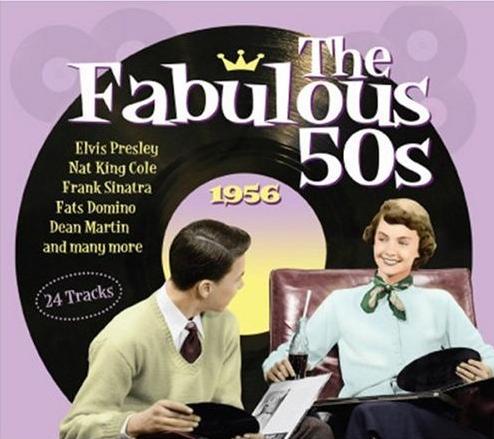
 This is the first volume to have a subtitle - "Over Easy" - which suggests there may be a companion volume reflecting the increasing popularity of rock'n'roll in the charts but I haven't come across it yet. Compare the 1956 volume which has at least four rock'n'roll classics; it didn't all stop the following year, y'know.

I do, however, note that among these big names of easy listening there are only about four I'd be surprised to find in the US charts at the same time; some earlier volumes have been more evenly balanced.

28 October 2010

Gnome Thoughts ... 24 (1956 charts, Hullensian overtaken)

As we cruise into the second half of the fifties in this series rock'n'roll is really kicking in, though big ballads and old-fashioned razamatazz can still be found in this representative cross section of what the British public were being subjected to over the airwaves. Rock With the Caveman, an early and not wholly convincing British attempt to rock, was written by Lionel Bart. Ronnie Hilton's No Other Love is the old guard, still in good voice.
Interesting footnote: Anne Shelton's corny but cheerful Lay Down Your Arms, which features at the end of Lipstick On Your Collar, was engineered by ... Joe Meek, producer extraordinaire: the future was just around the corner. And note this volume ends with Heartbreak Hotel, which was to change the lives of the young Lennon and McCartney.

Gnome Thoughts ... 23 (1955 charts)

As this compilation series heads for the mid-fifties there are one or two portents of what is to come: the Sinatras and the Mario Lanzas may still be present and correct, but the last two tracks are Pat Boone doing Ain't That a Shame and - even more worrying - Bill Haley's recording of Rock Around the Clock, the number which caused cinema seats in the UK to be ripped up when it featured on the soundtrack of The Blackboard Jungle (Glenn Ford as a do-gooding teacher, although he actually listens to jazz in the film; the song was stuck on as an afterthought).

Rock'n'Roll split listeners: no longer would kids listen to the same stuff as their parents. Yes folks, the "pop filth" rot starts here, this year, even if the majority of the tracks on this compilation are still geared towards wholesome family listening.

Haley was soon to have his own comeuppance: when he toured Britain and people saw a podgy middle-aged man with a kiss-curl, his appeal waned and Elvis Presley quickly took his place, inconwise, and in later years he went slightly bonkers and paranoid, according to Ian Whitcomb, but this moment was his. Pat Boone covered Fats Domino and Little Richard, trying to sanitise their raunchy records but such was the power of the originals that gambit couldn't last too long. Little Richard said the kids might have had Boone records in open view but his, Richard's, recordings would be under the bed.

Gnome Thoughts ... 22 (1954 charts, Goon Rock)


As 1955 approaches this world is not set to last much longer. Johnny Ray, the final artist on this compilation, is not rock'n'roll, exactly, but the OTT delivery is taking us away from that world of politeness and kids listening to the same records as their parents. Beware the 1955 volume ...

Gnome Thoughts ... 21 (1950-53 UK charts, Hoagland concedes)


Having talked in recent posts about the sickly nature of the pre-rock'n'roll British charts, now seems a good point for a quick look at some typical fare.

The Fabulous 50s is a CD series on the Xtra label, an offshoot of the ultra-cheapo Delta Music. I bought the first few volumes for work purposes because they were there - specifically, going cheap in the Bond Street branch of HMV - then my male need for completion forced me to buy later volumes as the UK's public domain laws permitted each subsequent issue.

Gnome Thoughts ... 20 (Stop Dreamin' at Guildford)


 I have just seen Stop Dreamin' at the Yvonne Arnaud Theatre in Guildford, where it's running till 6th November.

Sad to report that it didn't really work for me - though I did hear audience members say otherwise, both during the interval and at the end.

In fairness to Ray Cooney, he has dropped a character since a tryout in Windsor (Royce Mills, the imaginary "Mr Music" who only the dad could hear) so there must have been a lot of frantic rewriting, and perhaps all it needs is more time to develop.

But on the basis of what I saw last night, despite the verve of the performances and the effective use of some of the Chas and Dave songs, it seemed less than the sum of its parts, and I'm afraid that was down to the book - in other words, the Cooney end of things.

24 October 2010

Gnome Thoughts ... 19 (Reasons to be Cheerful, Lipstick on Your Collar, Joe Brown)


Further musical connections, presented in more fragmentary a form than usual; an explanation will be furnished for the above image in due course.


Engaged in the happy task of buying books for work for work on Thursday, I chanced upon a tome entitled Desert Island Lists. Yup, it did what it said on the tin: several decades' worth of the choices made by Plomley's guests.

On the offchance, I skimmed the index for Alan Klein: nope.

But Lionel Bart was there, and one of his choices was ... Peter Seller's Lonnie Donegan-style rendition of Any Old Iron.

Did that collision of things American and English - skiffle and music hall - help inspire Fings Ain't Wot They Used T'Be? Listening to it again (post 15, here), it rocks, however comical the intent. Which brings to mind Dave Marsh's summary of the Diamonds' cover of Little Darling (quoted way back in the Doowop Dialog[ue] here): a recording "as exciting as it is insincere."


On Friday I saw Reasons to Be Cheerful (above), a new musical featuring the songs of Ian Dury, at Theatre Royal, Stratford East - yes, the very same stage where the Fings ... mob and Alan Klein's characters in What a Crazy World first strutted their stuff. I'm not going to give a detailed review of it here except to say that it was a joyous occasion: the theatre is the right size to make musicals seem intimate, not overpowering.

19 October 2010

Gnome Thoughts ... 18 (Myles Rudge and Ted Dicks programme)


Have just listened to, and thoroughly recommend, "Right", Said Ted and Myles, which can be heard until October 26th on BBC Radio 7 by going to the page here, where you can even find a link to my earlier entry about the pair (it seems I constitute the "buzz").

The programme, presented by Philp Glassborow, was first broadcast in 2004 and appears to be drawn from a single interview in which Myles Rudge (lyrics), Ted Dicks (music) and Bernard Cribbins were all present, plus some additional contributions from George Martin.

But this is not going to be a review so much as a noting of points in the programme which have a bearing on this series of posts: in other words, how do these songs fit alongside those of Alan Klein and others of that era?

18 October 2010

Gnome Thoughts ... 17 (more songs by JP Long)


Further investigation into JP Long takes us back to Stratford East as, along with M. Scott, he wrote Oh It's a Lovely War, the 1917 music hall song which helped inspire the Theatre Workshop musical.

17 October 2010

Gnome Thoughts ... 16 (JP Long and My Old Man's a Dustman)


Have just found JP Long's lyrics for the original version of My Old Man's A Dustman, actually entitled What D'Yer Think of That?

16 October 2010

Gnome Thoughts ... 15 (Myles Rudge and Ted Dicks alert)


This is to alert readers that a programme about the writers of Bernard Cribbins' comedy songs, Myles Rudge and Ted Dicks, is going to be broadcast on BBC Radio 7 on Tuesday 19th October at 2.30pm if you're in the UK. And even if you're not, Radio 7 has a Listen Again facility for one week.

Don't bother clicking (or, armed with this new knowledge, refrain from further clicking of) the above image, which is a screengrab. Instead, go to the relevant BBC 7 page here, where it should be available on the BBC iplayer soon after the broadcast.


I'll be very interested to hear the programme, as I don't know much about the writers (Rudge is on the right, above), although I do remember reading Noel Coward praising one of the Cribbins hits on Desert Island Discs.

14 October 2010

Gnome Thoughts ... 14 (Alan Klein: corrections & clarifications)


Consider this post a Guardian-style Corrections and Clarifications column for earlier entries, as this is the first opportunity I've had to read the sleevenotes for the Well At Least Its British and New Vaudeville Band CDs.

Most of the information below, including direct quotations from Alan Klein, comes from these sources; Kieron Tyler and Mark Frumento are the respective writers.


First of all, the friend with whom Klein toured Europe before turning professional wasn't necessarily George Bellamy (above): Klein formed his "country and western duo" with Bellamy after the season at Butlins where the Tornado-in-waiting had been the guitarist with the Al Kline Five, though I suppose they could have been friends before that. And I note the pair played folk as well as country - which helps to explain the range of styles on Well At Least Its British:
Success seemed assured: appearances on the BBC's Saturday Club and billings with Alma Cogan and David Whitfield meant George and Alan [as the duo were called] were on their way.
But Klein eventually "had enough of interpreting the transatlantic sound and split from George," so it would seem that What a Crazy World was the result of his disenchantment with playing rock'n'roll at Butlins and country music with George Bellamy- plus a hefty dose of irritation with the charts:

Everything was so Americanised. All the hit records were covers of American songs.

9 October 2010

Gnome Thoughts ... 13 (Alan Klein interview)


More information about Alan Klein, thanks to Spencer Leigh, author of Halfway to Paradise, who very kindly sent me a 2008 interview from his On the Beat show on Radio Merseyside. 


This post also makes reference to sleevenotes by Kieron Tyler and a 1962 press release I assume was written by Ken Pitt, Klein's publicist (not manager, as I thought) at the time, but Spencer's interview is the backbone of this piece so I'm indebted to him for allowing me to transcribe it here.

According to wikipedia, Alan Charles Klein was born in Clerkenwell, London, on 29th June 1940. Ken Pitt (if it is he) takes up the story:
After leaving Grammar School, and being interested in Commercial Art, he studied at St Martin's School of Art. He bought a ukele, learned to play, and started composing. His father then bought him a guitar, and Alan worked hard at it, playing in pubs, clubs and anywhere they would let him.

Spencer Leigh (italicised in bold throughout) begins his interview with Alan Klein by asking:
Rock'n'roll came along in 1956, so is that what turned you on?

2 October 2010

Gnome Thoughts ... 12 (Damon Albarn on Alan Klein)


Have just come across the original context for Damon Albarn's remark about Alan Klein's influence - a 1995 article in Q magazine about Well At Least Its British, reproduced on a Blur forum:
This is the most colloquial record that I own. I discovered it quite by accident about five years ago in a charity shop, and it was instrumental in me making Modern Life Is Rubbish, and changing, and getting an idea of my own self.

25 September 2010

Gnome Thoughts ... 11 (Well At Least Its British)


And so to the the holy grail of this series about David Bowie's influences: Well At Least Its British, Alan Klein's 1964 solo album. (Find details of the CD release with extra tracks on the RPM website here.)

That may overstate the case - I don't know whether Bowie has ever actually credited him as an inspiration - but as mentioned earlier Klein had the same manager (Ken Pitt), and Damon Albarn has said of him: "I can’t believe that David Bowie didn’t know him inside out, and the same with Ray Davies." 

So he's worth consideration, at least - and as there isn't much about the album already out there, this post could even be something of a public service.

But the big question is: now that I've had a chance to hear it, does Well At Least Its British provide the key to unlocking those early Bowie songs?  Or failing that, is it at all Kink-y?

Gnome Thoughts ... 10 (Son of Hickory Holler's Tramp)


We are perhaps wandering away from Bowie and the Kinks in this entry, but thinking about Ruby, Don't Take Your Love to Town in the previous post has reminded me of another succinct story in song which also made a lasting impression on me as a child: The Son of Hickory Holler's Tramp, in the soulful version by O.C. Smith (above), a major UK hit in 1968.

Even if, as with Suggs and his response to the Kinks' Lola, I didn't really get it.

21 September 2010

Gnome Thoughts ... 9 (Ray is in the details)


This is more of a postscript to the previous two entries than a new undertaking, but worth placing separately as the ideas haven't come from me.

 Still fizzing with thoughts after the last entry, I was talking to a colleague about Waterloo Sunset and its possible influence on Bowie's songwriting. After a bit of mulling he cited Heroes - which instantly seemed obvious. It too couldn't really be described as a narrative, but it does have that image of a couple kissing which seems central to the song.

19 September 2010

Gnome Thoughts ... 8 (Waterloo Sunset)


I must have been eight years old when I first heard Waterloo Sunset, in the year of its release, and - like just about everyone else in the world - realised it was something special.

Perhaps for a child the fact that it wasn't, strictly speaking, a love song had something to do with it, even though lovers figure in it. Certainly Davies' late friend and mentor Ned Sherrin said that was what made it unique in the pop charts of the time.

For someone growing up in Scotland, however, the song's setting was enough to suggest something magical, even if the Engerland in my head may not have swung like a pendulum do. My childish notions of the country and its capital came largely from Ealing films on the telly, all decency and community spirit, tempered by odd glimpses in police series of a modern day city seemingly awash with criminals, spies and pyromaniacs like George Cole  (below) in Gideon's Way.


12 September 2010

Gnome Thoughts ... 7 (Bowie and the Kinks)


I've belatedly realised this series about early influences on David Bowie can't end without mention of Ray Davies and the Kinks.

9 September 2010

Gnome Thoughts ... 6 (music hall to rock)


This series of vaguely Bowied-related musings may be coming to a natural end. Or not. But this entry has the feeling of tying  up loose ends.

One question I've been wondering was whatever has Alan Klein being doing since 1970, as wikipedia isn't any use in this respect. And why didn't he write more musicals - assuming he didn't? And why did that whole vigorous genre of Theatre Workshop musicals die out?

8 September 2010

Gnome Thoughts ... 5 (What a Crazy, Violent Playground)


Have just found details of the 1975 Stratford East revival of What a Crazy World in which Ray Winstone (not playing the lead) made his debut. Seems like his real-life father had a touch of the Harry H Corbett character about him, as he was so unimpressed with his son's performance he advised him to "Give it up, while you're ahead".


The songlist below is taken from a theatre programme reproduced on the Ray Winstone  tribute website, copperlilly, here. Interesting to see that numbers which  were written for the film like Independence, have been retained - in fact, Winstone's character, Chas, is one of the singers.

7 September 2010

Gnome Thoughts ... 4 (What A Crazy World)


Have just refreshed my memory of What a Crazy World. Very enjoyable and - unlike Three Hats for Lisa, much as I love it - rooted in a very specific time. There's a lot of resentment from the parents, the father in particular (Harry H Corbett, who made his name at at Stratford East), about how much an office boy is earning these days.

Diversion: Which reminds me that a former boss who'd grown up in the sixties told me that you could have an argument at your work and storm out, certain in the knowledge that you would be fixed up with another job that same afternoon. So you could have as many arguments as you felt inclined, seemed to be the message. Unfortunately, by the time of our brief work acquaintance in the mid eighties I got the impression he was surprised and angered about where he'd ended up in a game of career musical chairs which had come to an abrupt halt. Luckily, I was only passing through his world. But that's another story - a play, even. Now all I have to do is rewrite to make it GOOD.

Sorry, that's my problem, I'll deal with it. (Or not.) To return to the film: although the title song mocks the parents for their negligence ("No one seems to notice me"), preferring bingo and betting to quality family time, there's a counterbalancing song shared by the mother and father, surrounded by their mates at the bingo hall and dog track (below) respectively.


5 September 2010

Gnome Thoughts ... 3 (Three Hats For Lisa)


Joe Brown went on to star in another film of which I am very fond, called Three Hats for Lisa. It's also set in London, but with no stage original that I know of, and songs not by Alan Klein but Newley collaborator Leslie Bricusse.


I have, on occasion, maintained that this is The Best Film Ever Made. But here, in the deep privacy of the unread blog, even I would have to admit that whatever the verve of the playing, we are veering more to Cliff Richard territory in the storyline (also by Bricusse, although the screenplay is by Talbot Rothwell). No pretentions to social criticism here, and the film is candyfloss-light and yet...

1 September 2010

Gnome Thoughts ... 2 (Anthony Newley, Alan Klein)


More thoughts and connections suggested themselves after I finished the previous entry.  My own fault, I suppose, for picking up Spencer Leigh's book (below) again. But it is a very enjoyable read.  Drawing on interviews with over a hundred musicians for a radio series, the story of the early days of British pop is told almost entirely through the words of the musicicans involved, and there is a mass of detail which I haven't read elsewhere. Apart from a few chapters in individual artists it's arranged by theme - US stars on tour, novelty records, early British idols (including Anthony Newley), skiffle, TV programmes, the trad boom, etc.


In between each chapter there are a few pages of archive music paper cuttings, allowing you to see less than overwhelmed initial responses to records - did you know, for example, that Love Me Do "tends to drag about mid-way, especially when the harmonica takes over for a spell"? Glad I wasn't within Lennon's orbit when that little pronouncement appeared.

Another cutting announces that Stanley "Scruffy" Dale (a devious character known to me from Graham McCann's biography of Frankie Howerd) is the new manager of Johnny Kidd and that "this should get the 'Kidd' really going places."; in the main text one of Leigh's interviewees angrily laments the way the trusting Kidd was duped by his management.

Quotations are numbered, so it's very easy to use the index of contributors to focus in on individuals such as Newley (the book was first published in 1996) and Ken Pitt. You can buy it directly from the author's website, here, rather more cheaply than through a well-known shopping website. It's not a lavish volume but it is packed with fascinating comments from a whole herd of horses' mouths.


I've already mentioned my surprise on learning from the book that Ken Pitt, Bowie's early manager, was involved in Anthony Newley's management. Going systematically through all the the contributions from Pitt and Newley has yielded further information. The difference between Anthony Newley (above, on location for Jazz Boat, 1960) and performers who "came out of that rock'n'roll chain" is spelt out by the man himself.

30 August 2010

Gnome Thoughts from a Foreign Country (The Vintage David Bowie)


 Now here's a real oddity (no pun intended). This 1983 songbook, recently obtained for work purposes, has several previously unpublished early Bowie songs, from his self-titled first album (1967) on Decca's hip offshoot label Deram, plus a few from his second album, also known as David Bowie, otherwise Space Oddity or Man of Words, Man of Music (1969). There are a few copies of the book on the net at the time of writing. The cover of the songbook, like many of the vinyl repackagings of the 1967 material, is deliberately misleading, but who cares if you already know what you're getting?

More unfortunate, in my view, is that the songbook is split between the two albums, possibly for fear that a book's worth of novelty songs would be too unpalatable. Space Oddity apart, the earlier songs are perhaps more interesting - although not necessarily for Bowie fans. Many have a distinct music hall influence, reflecting the pop of the time - the Kinks and Barrett-era Pink Floyd - and apparently it was released on the same day as Sergeant Pepper (which rather reminds me of Dave Clark - although in fairness it may have have been Clark channelled by Mark Shipper in his spoof biog - declaring that his group's rivalry with the Beatles could only be beneficial for both sides). 


But Bowie's vocals go back earlier, aping Anthony Newley's singing style.

Statcounter