
To mark the 42nd anniversary of John Lennon's death, extracts from two earlier posts, both written in 2010. Links to the full versions can be found at the end.

To mark the 42nd anniversary of John Lennon's death, extracts from two earlier posts, both written in 2010. Links to the full versions can be found at the end.

It has now been confirmed that Jerry Lee Lewis has died.
There can't be any doubt that he was the last of the true greats from the golden age of rock'n'roll; I can still recall the excitement of first hearing Whole Lotta Shakin' Going On, different from the frenzy of Little Richard's recordings but every bit as potent. In The Sound of the City Charlie Gillett had especial praise for his ability to sing, as it were, in inverted commas, never wholly abandoned like Richard but "almost always" with "an edge of detachment or even cynical derision", as though not quite buying into this "love" business:
This detachment enabled Lewis to pace his records, and control his audiences at live performances, with a finesse few rock'n'roll singers showed. He would have needed only Chuck Berry's flair for writing songs to be a comparably important figure.

A few years ago I wrote a series of pieces about the radio broadcasters who had contributed the most to my musical education over the years. Not all of these figures were attached to the BBC, but most were; and to celebrate that institution's 100th anniversary I've condensed those memories into one handy single post - no strenuous clicking required.

The Jake Thackray biography having arrived, I couldn't resist devouring it immediately, even though it's the kind of work which ought to be savoured at leisure. What follows is more by way of a few initial thoughts than a comprehensive review, but based on my frantic run at the thing the good news is that the book is all that might have been hoped for and can be recommended without reservation to thoroughgoing Thackrayites and the Jake-curious alike.
Today marks 25 years since a play of mine about a pizza delivery man and his determinedly awkward customer was first performed. It was part of a writers' showcase based around food - the theatre producing it had recently moved to new premises in an area associated with eateries. The building's transformation from its previous use had not yet been completed, however, and perhaps because this event took place before the official opening there is little mention of it online. Which seems a pity to me - and I daresay five others might feel the same, though they will have to tell their own stories in their own doo wop-related blogs.

A biography of Jake Thackray, written with the cooperation of friends and family, is due to be published by Leeds-based company Scratching Shed this August. I don't think anyone will be disappointed.

I had despaired of ever seeing it but 14 Karat Soul's first ever TV appearance, on Saturday Night Live on January 24th, 1981, can now be viewed online at the Internet Archive website, which is cause for celebration if you care for this sort of thing.

For anyone who doesn't know, Matt the Cat's shows about the Flamingos in his Juke in the Back series are currently being repeated via his website and can be recommended: he plays most of their records and provides a potted version of their story along the way. At present it's Episode One, which covers the group's time on Art Sheridan's Chance Records, their first label (1953-1954);

When a young soap actor who originates a role is replaced does he or she have any legal recourse? That's the question posed in a new book, Outside Soap, by Charles Hamm, to be published tomorrow. The timing couldn't be better, as a case may soon be going to court: this week a former star has announced his intention to sue for loss of earnings, based on the number of years in which his successor played the role. And if the action is successful that may prove quite a tidy sum, so alarm bells must be ringing in the offices of television companies up and down the land.
For viewers of British soaps it's a familiar story: a young actor plays a character for ten or fifteen years, often right from the moment of his or her onscreen birth, only to be replaced by - well, not even a lookie-likey in many cases.
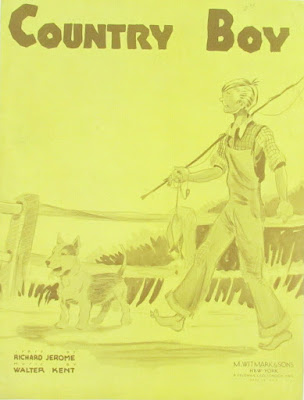
I've already paid tribute to Hubert Gregg but this footnote has become necessary because I've just discovered the details about a record he played on his radio show Thanks for the Memory which had been eluding me for - ohhh, only around the last four decades or so.

If you have read Robert Webb's memoir How Not to Be a Boy you may remember that the youthful Webb mentions an unlikely source of comedic inspiration: the mainstream sitcom No Place Like Home, which ran for five series on BBC1 in the 1980s.
It's about a middle-aged man, chagrined to find his grown-up children have taken up residence in the family home once again - a bit like Eric Chappell's Home to Roost, on around the same time - only more so, as this put-upon dad is lumbered with four kids and a wife. Not the most obvious sitcom, perhaps, to stir the blood of one who went on to star in a gloriously dark example of the genre but that's what seems to have set the seal on Webb's decision to become a performer.
Not that he offers an unqualified tribute to the ability of its writer, Jon Watkins.

I don't suppose it will be news to many of its former customers that the London bakery chain Percy Ingle's closed all its shops last year. But it certainly came as a shock to me when I made the discovery a few weeks ago.
Even though the local branch had been shut ever since the first lockdown it didn't occur to me that this might be the end. Call it denial, arrant stupidity, or what you will, but I think I'd vaguely assumed that they were waiting for the final all-clear, reluctant to go head to head with the more widely known rival depicted above, or, I dunno, maybe one of the assistants had got covid or the family-run company was reluctant to put staff at risk, or ...
In my defence, although the shop had been shuttered there had been no other indication that anything might be afoot, no sign of building work or the interior being stripped or anything - until, that is, one morning a comparatively trendy eaterie was suddenly there in its stead. Which led me to search out the articles online and read the sad details about this situation.

My one and only foray into karaoke (literally "empty glutton", unless I'm thinking of something else) occurred a few Christmases ago, on a Scottish island blessed with several pubs. My companion and I were visiting our friend, whom I'll call Ronaldo; he was working in one of those establishments, and on the first night of our stay we went there - not to sing but to do a recce.
I have to admit that I had come to scoff - or at least, that's what I presumed would be the outcome of my visit. Blessed, or cursed, with a certain amount of knowledge about popular music, and being, furthermore, in possession of two elder brothers, the idea of what is and is not cool, musically speaking, is lodged firmly in the Pismotalitian brain, permitting of no deviation.
Anyway, that first night we perched at the bar, stopping occasionally to listen to what was, in youthful parlance, "going down". Did I splutter into my beer at some of the punters' efforts assailing our ears? Did I then fall to the ground, clutching my stomach while crying out, again and again: "No more! Oh, in God's name, no more!"?

Three months on from the previous posting I hereby declare my "wee phrase" of buying up old cassettes from a well-known auction website exhausted. Not that this means I'm any nearer a conclusion about the wisdom of re-embracing this ancient medium. If I could be said to have embraced it: an air-peck-on-the-cheek, if anything. Even though I must have bought around a dozen I've only listened to a few.
Why the reluctance? Two reasons, one more fanciful than the other.

It may be a passing fancy, and in time may go, but I wish to announce that I have re-embraced the humble cassette, that much-loved companion of This Great Nation's former days, and to boast - or confess - that even though I've already got a couple of large plastic crates piled high with 'em I've been spending most of today buying even more via a well-known auction website. I'm aware that this frenzy could be spent out in a matter of days: I haven't listened to any of my old tapes yet, and as one of those crates was slumbering on a shelf very near my TV it may be that they have become magnetised and unlistenable.

Now who, in their right minds, would buy a CD like this?
In my case the answer is simple: this was one of the discs which always seemed to be there as you walked into Cheapo, entreating you to buy it: the musical equivalent of a lonely pup in a Christmas shop. I must have scanned the tracklisting on more than one occasion then replaced it. I mean ... Pat Boone? Why Do Fools Fall in Love by the Diamonds? I Count the Tears as a solo Ben E King track even though the Drifters are credited on Save the Last Dance for Me? The absence of an apostrophe on a Clyde McPhatter hit? I could go on ...
Whenever I start to recreate a visit to Cheapo Cheapo Records in my head I always find myself striding purposefully towards the very back of the shop, ignoring the lure of those goodies nearer the entrance.
Which is odd, because this wasn't something I ever actually did.

 2. Up the Swanee tells the story of the dispute between father and son puppeteers Harry and Matthew Corbett; a more faithful account may be found in Geoff Tibballs' biography of Sooty.
A selection of eleven comedy-related posts, mostly reviews of books or TV programmes. Click on any image to be taken to the post described immediately below.
1: Eric and Ernie

Well, I say "reviews" ... in the case of this first piece it would be more accurately described as: "notes reflecting on the few aspects which interest me because that's how I roll."
This first piece is about Peter Bowker's TV drama Eric and Ernie, recreating the early days of Morecambe and Wise, and because I'd read so much about the pair I became fixated on sins of omission, as you will see if you click on the picture above, which shows Victoria Wood as Eric's mother, Sadie Bartholomew, being waved off, her job done, as the pair embark on their career.
Another eleven posts from the archive. Click on the image to read the piece described below.
1 : Golden Teardrops - the Flamingos

Although a more extensive piece on the Flamingos' Golden Teardrops can be found elsewhere, I'm fond of this earlier attempt to describe it during my 2000 dialogue with Clarke Davis. The style - of my writing, I mean - may be a little overheated but it reflects the excitement I felt at the new experience of sharing my passion for doo wop with like-minded people, and I'm eternally grateful to those who expressed their appreciation by sending gifts of CDs, tapes and videos which couldn't be found in the UK.
2 : You Have Two (I Have None) - the Orchids

3 : Waterloo Sunset - the Kinks

At some point in 2010 I gave myself permission to stray from the exclusive consideration of doo wop in these pages. This piece about Ray Davies's Waterloo Sunset was part of Gnome Thoughts, an unplanned, ever-expanding, series about David Bowie's early musical influences.
To mark eleven (count 'em!) years of blogging, an introduction to a selection of posts from 2009-2020, one from each year.
Click on any image to read the piece described immediately below.
2020
 |
Billy Shelton taught Pookie Hudson how to sing in the glee club at Roosevelt High in Gary, Indiana and formed a trio with him and another schoolfriend, predating the Spaniels. In the 1990s, when the original Spaniels reformed, Billy took the place of Ernest Warren, then a minister, and he still leads a group of Spaniels today. This piece, distilled from several lengthy interviews with Billy in 2016 and 2020, is around 25,000 words and covers his whole life and career. There aren't too many people still around from the very beginning of doo wop, so it was a privilege, as well as a pleasure, to help spread the story of one of the originators. (Photograph from 1950 school yearbook, shared by Todd Baptista on social media.)
2019

In 2019 I interviewed Pete West as part of ongoing research into the songwriter Alan Klein: Pete had been lead guitarist in the group which morphed into "the Al Kline Five" after Alan joined in the late fifties. For several years they played weekend gigs around North London but when the chance of a summer season at Butlins Skegness meant turning pro Pete had to decide whether he wanted to give up the security of his well-paid job ... (Thanks to Ken Aslet for the photographs of the band which illustrate this piece; that's Pete in the foreground above.)

TOTP was something shared
exclusively between myself and my brothers. There wasn't a great deal of music in our
house. I do recall one rare single bought by one or other of my parents: Tears by Ken Dodd - though I don't recall its being played except by one of us. True, Dodd was a Liverpudlian, but we knew wasn't the same as the Fab Four.
The Beatles, as the most newsworthy representatives of the new style of music to be heard on TOTP, were half-heartedly tolerated by my mother but actively disliked by my father, who considered their financial success as unfairly earned and saw their creed of pleasure as something dangerous. I recall listening to the White Album for the first time on a brand new Boots stereo bought by my immediate elder brother, and the paternal disapproval over the collage-type insert with bare flesh: "I'm not very happy about that." Mild words - but as Bertie Wooster would have put it, he meant them to sting.

For UK readers, Michael Epstein's 2010 documentary LENNONYC, known over here as Lennon: The New York Years, has just been repeated on BBC 4 and will be available to watch on BBC iplayer until November 8th. It's well worth watching if you didn't happen to catch it last night.
Even if you did see it you may not be aware of the documentary equivalent of bonus tracks available on the PBS website: the raw audio for ten interviews in which director Michael Epstein can be heard gently prompting - and occasionally prodding - interviewees to talk about matters which, in some cases, they haven't discussed publicly before.

Dono-fans will be pleased to learn that the concert at London's Cadogan Hall which had to be cancelled in April has now been rescheduled for Monday, 12th October. He will be playing two shows that day, to allow for social distancing, and both will be livestreamed.

Tony had written an account of his search for his father, the singer Johnny Flamingo, which was published in the Guardian, and it struck me that it had potential as a drama; we chatted about it and he suggested I try and work something up and send it to him.

Billy Shelton has described himself in interviews as "a prehistoric Spaniel". He wasn't with the celebrated doo wop group during their hitmaking days on Vee-Jay Records in the 1950s but he taught their leader, James "Pookie" Hudson, how to sing during their time together at Roosevelt High School in Gary, Indiana, forming a vocal trio called the Three Bees with Pookie and another schoolfriend, Calvin Fossett.
Billy left school before Pookie, who was eventually prevailed upon by other schoolmates to join the group which became the Spaniels. A few years into their professional career Billy received several invitations to join them but resisted; he didn't become a member until the late 1980s.
This was the second lineup of Spaniels, to be heard on later Vee-Jay sides such as Everyone's Laughing. Around 1990, however, Pookie decided to reform the original group, who had sung on Vee-Jay's debut release Baby It's You and the classic Goodnite, Sweetheart, Goodnite. All the original members, who had long been out of the business, were keen to get back together with the exception of Ernest Warren, who had become a minister, and Billy took his place.
Now Billy Shelton is the last man standing from those Roosevelt High days – and still leading a group of Spaniels. They can be seen in Episode One of the BBC documentary series Rock'n'Roll America, with Billy intoning those immortal bass notes of Gerald Gregory's which usher in Goodnite, Sweetheart, Goodnite.

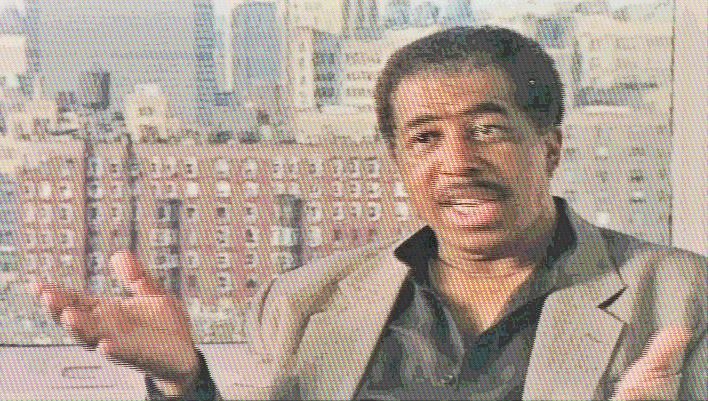
As mentioned in the previous post, Brent Wilson contacted Ben E King for the doo wop documentary Streetlight Harmonies but the singer died before an interview could be set up.
It's a great pity, in more than one sense. Wilson seems to have taken considerable pains to gain the trust of the artists who took part, and even though contributions were heavily edited in the final version the raw footage must have been quite extensive if the case of Vito Picone of the Elegants is anything to go by. According to a virtual Q&A Picone was "in the chair" for a straight six hours before someone realised it might be time to break for a meal.

I have just watched Streetlight Harmonies, Brent Wilson's new documentary about doo wop, and it's well worth your attention whether you are an aficionado or merely, as it were, doo wop-curious. A little over eighty minutes, it provides a very clear overview of the era as well as some discussion about the genre's lasting influence. It may not be the first film dedicated to the subject but where it excels is in the deft editing of the testimony of a large number of interviewees, allowing the story of this music to be told almost entirely through the artists' own words. Charlie Horner, credited as historical consultant, makes an occasional appearance when context is needed and DJ Jerry Blavat ("The Geator with the Heater"), songwriter Jeff Barry and some others appear, although the vast majority of interviewees are group members (including some representatives of girl groups).
Interviews have been cut up and are spread throughout the film according to theme. The focus is on doo wop as a phenomenon and the experiences common to all those involved rather than having large sections dedicated to individual artists or groups. That might sound bitty but it isn't; the narrative flows very well. At the beginning we get an introductory segment about the form's gospel origins then we move to the Orioles and then - no, not to the Dominos, as a more detailed chronological approach might have taken us, but Frankie Lymon ... which is a bit of a jump, though it can certainly be justified as another major breakthrough.


Like all right-thinking people I follow Alwyn Turner's online series Revive 45 on the Lion and Unicorn website, and I urge the more malleable reader to go forth and do likewise. Once a month Mr Turner casts his eye over the top ten from forty five years ago, and the resulting mix of insight, original research (he's interviewed quite a few of the artists) and unashamed enthusiasm for hits long condemned as "uncool" by others has frequently been an ear-opener for me - and he knows how to turn the odd pleasing phrase too. The most recent post considers the charts from April 1975, including Bobby Goldsboro's oft-disparaged Honey (above).
Reading the piece has prompted me to listen to Goldsboro's record again and to look at the lyrics more closely. But before I get onto a more detailed examination I need to bring a certain hangup of mine into the open. The notional "coolnesss" or otherwise of certain records has often proven a hurdle to my fullhearted enjoyment of them, so I rather envy Mr Turner's lack of shame in that respect. I suppose it all goes back to my childhood ... childhood ... childhood ...

Update: Spencer Leigh's Could This Be Magic? has now been been published as an e-book and is available worldwide from UK amazon here and US amazon here.
This is to let readers know that the DJ and author Spencer Leigh has written a book about doo wop which will be published this Friday, 17th April.
The current crisis means that it will be issued initially in e-book form, although it's hoped a hard copy will be available later. I recently read an advance copy of the book, which is entitled Could It Be Magic?, and chatted to Spencer Leigh about it.

There will be no hooliganism. There will be no vandalism. There will be no bevvying ... because the world is watching us.It was repeated today on BBC Radio 4 Extra, and as far as I can tell will remain available, for UK and US listeners alike, for at least a month - very possibly longer.

I have just heard Adam Thorpe's 2003 radio play Nought Happens Thus Twice, about Thomas Hardy's second marriage, to Florence Dugdale.
There is no more plot than Long Day's Journey Into Night, say, or Sebastian Barry's The Steward of Christendom - in this case it's simply whether or not Florence will agree to accompany her husband on a jaunt - but it remains compelling throughout.
My friend late of North Berwick did not like this kind of play, an attitude I could never really understand. Okay, it's really no more than a camera slowly zooming in on its subjects, but what's wrong with that? It's certainly a difficult trick to pull off because as a writer you don't have the safety net of a plot for the audience to focus on to redeem the play if the dialogue happens to be less than stellar.
As is well known, Thomas Hardy's second marriage had its difficulties. In R.C. Sherriff's autobiography No Leading Lady the writer of Journey's End describes meetings with various literary lions after the success of his play, among them J.M. Barrie and Hardy. (The meeting with Barrie is at once hilarious and sad, but you will have to seek this highly entertaining memoir out for yourself.)
Florence was already Hardy's wife by the time Sherriff was being feted, and when she had a moment alone with the playwright she confided that she had been recently dragged along by Hardy to some muddy field in which he stood for an aeon in rapt contemplation because it evoked in him yet another memory of Wife Number One. Which is great for Hardy (and, indeed, for the world, because the best of his poems about Emma, written after her death, are very good indeed) but not so much so for the woman who is meant to have supplanted Emma in his affections.
Thorpe's play reminded me a little of the Maysles brothers' documentary Grey Gardens (which later became a musical) because we're likewise in the presence of two people who have been locked together for far too long, with no means of escape, and so there are cyclical recriminations, with nothing pushed to its resolution, because this is just one more day in purgatory and neither party is going to walk away. The outside world (the presence of the documentary makers in Grey Gardens, the invitation to see a film crew in Nought Happens Twice) maybe provides more of a focus than usual, but that's about it.
Still, you can't live at that kind of pitch 24 hours a day, and there are moments in the Hardy play when the couple seize on a distraction - the sighting of a grey squirrel as opposed to a red one - to provide respite, or maybe just to show that they do have things in common. There is even a kind of sitcom element - not that this is exactly a laff-o-rama - because it's the classic situation of two people being trapped together in a marriage or quasi-marriage, as with Steptoe and Son. And it may be remembered that Harold is capable of considerable verbal cruelty through the frustration of being trapped forever with his dad. His sarcastic or mocking words are a way of deluding himself that he has free will, but in that context they are no more powerful than that of a prisoner mocking his jailer - another sitcom premise. I am reminded, in fact, of a phrase used by Hardy in a poem about a prisoner and escort at a railway station: "grimful glee". So Florence talks of making a bonfire of Emma's things once Hardy is dead, but she, like Harold Steptoe, has a kind of special license. At the end of the play (spoiler alert) she does agree to visit the film crew - though the twist is that by that point, Hardy is reluctant, for fear that her obvious emotional state after all the conflicts they have been reheating will signal to onlookers that all is not well with the marriage.
It does help if you have some knowledge of Hardy, I suppose, to enjoy the play but it's not absolutely necessary. The piece's great strength is the teasing out of detail to provide an ever clearer impression of the enormous, unscaleable hole into which the two have toppled. It's just one more weary rehearsing of grievances (shades of yet another sitcom), upon which we happen to be eavesdropping.
Florence Dugdale had been a teacher in Enfield, and the poem from which the play's title is taken describes Hardy seeing her on a platform in Liverpool Street Station. Hardy watches her diminishing form as she goes down the platform towards the train - he's at the barrier - and, this presumably being the first youthful flush of their love, he laments that whatever future plans are made this moment, this feeling, will never return. Actually, why don't you read it for yourself here?
And while you're at it, why not read what Cecil Day-Lewis called "Hardy's great farewell to love", At Castel Boterel, here? The latter is a poem I love very much, along with After a Journey and I Found Her Out There - all of them about Emma, not Florence. And that grimfully gleeful sitcom pilot of a poem, more of a minor work, a snapshot, can be found here.
Update 16/8/21: Adam Thorpe's play, starring Patrick Malahide and Sylvestra Le Touzel and directed by Patrick Rayner, can be currently found on youtube here.

A couple of weeks ago, during an interview with Joe Brown, Spencer Leigh let slip that he would be 75 on the first of February, the date of Brown's gig at the Liverpool Phil - which Spencer will, of course, be attending.
Like Joe Brown, Spencer's longrunning On the Beat show on BBC Radio Merseyside is still on the go, and long may it continue. I've really grown to enjoy his wide-ranging musical knowledge and his unshowy delivery. Performers seem to open up to him because they know that he knows his stuff and he cares about it. He has written books about various aspects of pop music: he has a particular interest in Merseybeat and the Beatles but his knowledge of rock'n'roll and 60s/70s pop seems pretty far-reaching.
His, for example, was the only UK obituary of Pookie Hudson (in the Independent) which gave any indication of familiarity with the Spaniels' biography. And during a Steve Cropper interview he was able to make the leap between the Beatles' 12 Bar Original and Green (not Glass) Onions. Not to mention a discussion with (I think) one of the Searchers about just what sort of kiss it was in Sweets For My Sweet which "thrilled me so." Or pointing out the pinch from the Diamonds' version of Little Darling at the end of the Beatles' Misery. All in one episode.
The programme isn't parochial, even though he will announce local gigs and his knowledge of Merseybeat and the Beatles will come to the fore. The scope of the programme is much wider than that. If you could weep when you think of the amount of time you have spent in the past listening to interviews by DJs or TV figures who haven't done their homework or simply don't have that much invested in the interaction then in a quiet sort of way Spencer will be a revelation because he does care - and he can make the musical connections which can illuminate things for the listener. During that recent Joe Brown interview there was an anecdote about George Harrison subjecting Scotty Moore to an evening of George Formby songs, to Moore's obvious discomfiture. Who else but Spencer would have pointed out that Pete Seeger was a Formby fan?
There is, in short, a foundation of wideranging knowledge which means that his interviews are more rewarding than in many other cases, and you can hear it in the performers' response to his questions: you can hear them relaxing and opening up, because it sounds like they're being talked to by a human being who has actually enjoyed their music, not a Radio Personality. Tommy Hunt mentioned during an interview that when he heard Spencer's voice on the phone "I knew he was gonna be nice."
When I began writing this blog I thought I would only write about doo wop. But other music I'd grown up listening to crept in, and of course it was all connected. Why not just celebrate it all? Which is what I've tried to do. And what I get most strongly from Spencer's show is that he too thinks all this, the broad sweep of popular music, is important. On his personal website he says of On the Beat:
My radio programmes contain many interviews with a wide variety of people from the world of pop, rock, country, soul ... everything in fact. I hope to provide an insight to their music, and give the listener an opportunity to hear the unusual as well as the familiar.
Well, for my money he does - frequently. And if you haven't heard this little gem of a show, you can listen to recent episodes here. The Joe Brown episode is here. Spencer's own website, where you can read articles, buy his books, and see a list of past On the Beat guests, is here.
On the Beat is broadcast on BBC Radio Merseyside every Sunday 7.00-8.00pm.

The Flamingos are one of the greatest, and most enduring, doo wop groups of them all, so it's a pleasure to report that Todd Baptista's biography, the first full-length study of the group, doesn't disappoint: this is a meticulously researched and very well organised account of their fortunes and changing personnel. The Flamingos' many permutations may not quite be in the Drifters' league but I can't have been the only one who found them confusing before Mr Baptista laid them out in these pages with such admirable clarity.
I confess to having been a little apprehensive when first picking up the book. With all the original members now dead, might the story turn out to be weighted in favour of Terry Johnson, the musical force behind what one might call the Mark II group? Encouraged by George Goldner, he helped steer them in more of a pop direction during their time on Goldner's End Records, leading to the huge crossover success of I Only Have Eyes For You ... but that was six years after Golden Teardrops, regarded by many as the greatest doo wop record of all, had been recorded for Chance Records in Chicago some time before Johnson joined.
As it turned out, however, I needn't have worried. Although Johnson's comments feature throughout the text due prominence is accorded to the group's R&B years in Chicago when Johnny Carter, later to join the Dells, was their presiding musical guide, cowriting and soaring over Golden Teardrops.

This is to draw readers' attention to Andrew Hickey's podcast A History of Rock Music in 500 Songs and the accompanying book which covers his first fifty choices.
New podcasts are coming out at the rate of one a week, and although he has not chosen all the songs yet Mr Hickey plans to take the story up to 1999. That's a decade or three outside my area of keenest interest but on the basis of the podcasts released so far - 64 to date in roughly chronological order, with Reet Petite the most recent - this ambitious endeavour can be recommended as a painless way of learning a great deal in the shortest possible space of time about the history and development of R&B and rock'n'roll. Mr Hickey has read the right books - and I'm pleased to note he gives Marv Goldberg's R&B Notebooks website the credit it so richly deserves - but, crucially, he does not assume any pre-existing knowledge on his listeners' part: you can start here if you know nothing about the history of this music.
It does help to listen to the podcasts, or read the chapters, in sequence, although he will usefully reiterate or sum up a point from some earlier programme, or direct you to it, and will indicate which pieces are better absorbed together, as with three related podcasts about Sun Records artists.

A few months ago I made my way to the village of Lemsford, in Hertfordshire, to meet Henri Harrison, former drummer of the New Vaudeville Band, and see his current group, Henri's Hotshots, in action at Lemsford Jazz Club.
I particularly wanted to find out more about Alan Klein's time with the
New Vaudeville Band, especially as Mark Blake's recent biography of their manager
Peter Grant doesn't have much to say on the subject. But the ways in which performers adapt and survive when fame has ebbed away is an abiding fascination, so I was also
looking forward to the opportunity of hearing the band's story from the one man who had
been there from soup to nuts. Henri played on the recording of Winchester Cathedral alongside other
session men when "The New Vaudeville Band" was just a thing in
songwriter Geoff Stephens' dream, and was still behind the drumkit of
the flesh-and-blood group, by then long mutated into a cabaret act,
when they finally called it a day some twenty years later.
Henri's Hotshots play unashamed goodtime jazz of a high order, and I spent a happy afternoon in the airy surroundings of the village hall, where the club regularly meets, listening to a mix of well-known and more adventurous numbers. A highlight was Fats Waller and Andy Razaf's Black and Blue - technically just Waller, I suppose, as there was no vocal, though the playing felt true to the spirit of Razaf's lyric, with particularly notable clarinet and trombone solos. There was also a good version of Lazy River which, like Black and Blue, put me in mind of Louis Armstrong's early big band recording of the tune; I was half-expecting to hear an affirmative "Yeah!" punctuating proceedings.
Black and Blue and other performances from the day have been captured for posterity by Peter Mark Butler and can be found on his jazzandjazz website here. Mr Butler has made it his mission to promote British jazz with videoclips and news of forthcoming events; his website is well worth exploring.
There was also what might be termed a "washboard-off" between Henri Harrison and Brian Smith, aka "Smiffy", who runs the club, though there was too much good humour involved to regard it as a cutting contest: at one point Smiffy threw his hat onto Henri's washboard by way of sabotage or rueful acknowledgement of his opponent's skills, but that was as far as hostilities went. (You can relive the tension here.) A good time was had by all present, and if you are a fan of vintage jazz then Henri's Hotshots can be recommended.
Introductions having been kindly effected by Mr Butler during the interval, I spoke to Henri afterwards in a nearby pub. But to set the scene here's part of Alan Klein's own account of how he came to join the New Vaudeville Band, as told to Spencer Leigh (a fuller version can be found here). After a dry spell following the release of his album Well At Least Its British he happened to bump into Geoff Stephens, who was looking for material to fill out an album capitalising on the success of Winchester Cathedral.
So I said, "I've got a silly song that I wrote the other day that might be on it, called Whatever Happened to Phyllis Puke?" And he said, "Oh I love that! I love that title, I'll have that song!" ... we went down to a studio and I recorded it, just with a guitar.Here is the finished version of that song:
Afterwards he said, "What are you doing generally?" I said, "Well, not a lot really," so he said "Would you be interested, or do you know anybody who'd like to sing with the band?" And I didn't realise he was offering me the job. I think I said "No, I can't think of anyone, Geoff, actually, offhand," so he said,"Well what about yourself?" I said, "Well, I can't sing myself, never really saw meself as a singer," so he said,"Well, it sounds fine - would you be interested in the job, then?" So I said, "Well, I'll give it a shot, yeah" - a week later I was on the Ed Sullivan Show in New York!
Before you could say Jack Robinson Geoff had made an album [using session musicians]. And we did a couple of tracks on that album, in Regent Sound, before Alan joined. I was dancing with a girl in New York at a party and I said "This is good, who is it?" And she said: "You!" I didn't even know; it was something we'd made with session guys and it happened amazingly quickly. I had been in a band and gone to Europe but to suddenly go to the States was unreal.
Initially we went in 1967 and then we did the Ed Sullivan Show, that was the big thing: the record had dropped down to Number Two but after that it shot up to Number One again. We did the Merv Griffin Show and other TV shows and a little promo tour, then we went back before Christmas of that year and did the first spot in Vegas, which was really successful. Then in 1968 we did a second tour when we did Vegas again and went all over the States - all the State Fairs and things like that."Places like Las Vegas and Reno, Nevada - the cabaret circuit ... They weren't exactly a rock band", as Peter Grant is quoted as saying in Mark Blake's biography, Bring It On Home, which also includes a description by Grant's lieutenant, Richard Cole, of a gig in Atlantic City when Henri and his bandmates had to share the bill with a diving horse:
The old stagehand told us not to go over our twenty minutes because everybody would leave to watch the horse. We thought, 'F*** that.' But they did - everybody left. This horse was hoisted in a harness with a girl on its back before plunging thirty feet into a tank of water.Henri continues:
That whole year we were back and forth to America all the time rather than go[ing] to other territories because there was more money there, really. We did a few gigs in the UK with Alan, he did the two years when we were up in the charts and then he just totally wanted to move on.Peter Grant's increasing preoccupation with his new (and decidedly non-cabaret) act, Led Zeppelin, may have contributed to Alan's decision:
I've got a feeling Peter Grant missed out on something because we were doing so well there at the Tropicana [in Las Vegas] that I think Richard Cole [reckons] some guys were gonna come over from Caesar's and offer us something - which is a shame we lost out. Could have done us a hell of a lot of good but there you go.Was that the point when Alan said "I'm off"?
Probably if we'd had an offer like that he might have said I'll stay on for the Vegas thing.I asked whether, despite being lead singer, Alan really had much of a say, or whether it was Geoff Stephens' vehicle. "I think Geoff Stephens would have been happy to go on releasing records by session musicians and not ever having a band, but the BBC obviously didn't like that idea at all."

Geoff Stephens had the music and it was actually called Aluminium, about a female washboard player: "Aluminium, on her fingers ..." Alan said, "Oh, they're useless lyrics, they are," and Geoff said "Well, if you can do better you do something." So he got on the train on the Northern Line and looked up: "Finchley Central, that's better than aluminium." So he wrote all the words then, in the process of going to his home in Finchley, and gave it to Geoff the next day.Now that I didn't know ...
Yeah, there was an element of that: New Temperance Seven meets rock'n'roll, basically - there's a rock beat to Winchester Cathedral with the Temperance Seven feel to it. I went to Geoff's home and he had gone into it quite a bit, listening to old records from the era; he was going through a craze of being interested. Of course, he's written hits for all sorts of people, either on his own or with others; it's endless. Tom Jones, David Soul ...Even if the invitation to join the New Vaudeville Band came at a lean time in Alan's solo career, I suggest that he must have been in his element fronting such a band, given his penchant for comedy songs. Part of the reason for my wishing to interview Henri in the first place was a remark he had made to Mark Frumento about Alan:
Geoff conceived the whole idea of the New Vaudeville Band and thought up the name. He thought it was a good time to do vo-de-oh-doh meets rock'n'roll, and obviously it worked; he was a very clever man and made lots of dough out of it, but he didn't have the pleasure of travelling around the world that we [the band] were getting - you can't really value that. He stayed at home - he lives in Berkhamstead at the moment.
Alan really played it up. At one point some people really thought he was an earl.So I askwhether Alan remained in character during his time with the group.
Oh yeah, he went thoroughly into that character: a laconic, upper class thing. He did a pretty good job of it.I mention his admiration for Noel Coward:
Yeah, that was how he managed to get his voice to fit in with the Vauds; it was just funny now and then when he would slip into his Cockney accent.And even if Alan told Geoff Stephens that he never regarded himself as a singer Henri says he fitted very well into the group. "Jonathan King came up to him after one Top of the Pops appearance and said: 'I love your deep brown voice.'"
The group's nationality was still a big selling point in America even though this was a couple of years after the British Invasion :
We still used to get people stopping us on Broadway: "Are you really from England? Say something to me! Do you know the Beatles?" All this sort of thing. It was amazing to suddenly be there, doing all this. It was a super era - pity it's not all recorded like it would be now. For a short time, after Ed Sullivan, we were very big, but we were never going to be appealing to girls because our hits weren't love songs.So what of the group's fortunes after Alan?
We did 69-71 in Canada, then the last year was living in Vegas. Then we came back to the UK in 1972 and reestablished ourselves with more or less a completely different lineup.

Yeah, that was the whole idea - before that we'd tried to cover everything. The Bonzos got a lot of street cred with political jokes or whatever; we were just purely out-and-out cabaret - it went down well and people used to like us. We got guys in who could play modern pop so on the cabaret circuit we'd do things by the Stylistics, Stevie Wonder, the Commodores or whoever, in amongst a bit of jazz and comedy songs like Windsor Davies and Don Estelle.At some point after the band's return to the UK there was a meeting in Peter Grant's office with Mickie Most, who suggested they change their name, which took Henri aback:
I thought the whole point is we've got a name. I didn't really see our value in the studio without being the New Vaudeville Band - we weren't brilliant musicians or vocalists or anything. But Mickie Most was obviously very successful in what he did; perhaps I should have said yes.He doesn't appear particularly regretful, however, hinting that that in any case Most would have got the lion's share of the spoils. The group did go on to make recordings after their pop heyday, and Henri had the happy surprise of meeting Alan's daughter Karen when this later version of the band was recording for SRT in the early seventies; Henri can be seen below, bottom row, second from the right, on the back cover of Live Vaudeville.

When we split from Geoff Stephens and took over the band name we went to Companies House and re-registered in the name of the members that were in the band at the time, then as each member left we'd pay them off; we probably didn't need to it officially but it felt like the best thing to do.So this was about having a secure and regular cabaret gig?
Yes, absolutely: keep working the name. I was sure there was value in it and there was - and there probably still would be to a degree today.It's an arrangement which some other groups of the era would have done well to emulate. Henri fills me in on the current controversy regarding ex-Bonzo Dog Band members' use of their name, which naturally leads to that earlier controversy about the New Vaudeville Band being seen merely as imitators of the Bonzos.
They didn't like me because when Bob joined us [in the New Vaudeville Band] he had just left the Bonzos - and we did nick loads of their ideas.
He was paranoid but justifiably so because he was doing this 1920s, 1930s stuff, going along fairly well, then all of a sudden we come along. The Bonzos hated me because I'd taken Bob on; Spencer's Washboard Kings were also doing that sort of thing and we nicked a few people from them as well. Then all of a sudden we're at the Palladium doing a lot of the things that the Bonzos did, holding the cards up: "Isn't he wonderful?" etc. But then they got Bob back in on the reunion and he did quite a few gigs with them, though that's all fallen apart now.

Not really, because they've always been into the more way out sort of stuff. I don't think they'd have worked on the cabaret scene really - you know, working men's clubs, they'd have been too clever for that. They did do some military gigs and I think it didn't really work, whereas we could do all ranks - the Whoopee Band would be too many in-jokes.When the New Vaudeville Band finally came to an end Henri became an agent, but on his retirement he was suddenly aware of the phones not ringing. Then an offer came from Bob Kerr to join him in the Whoopee Band. Not having played for so long, Henri was apprehensive before the first gig, in Germany, but a comment he overheard afterwards - "See? I told you he could do it!" - boosted his confidence, although it did take a while before the act of drumming felt truly instinctive again. And having led the New Vaudeville Band for so long he enjoyed not having the responsibility of being the leader: "I could just get on a plane and do things."
I joined Bob Kerr's Whoopee Band about fifteen years ago and it's only just come to an end. I think Bob just had enough, really - not enough bread to get a full load of people behind him to make it work: not enough roadies or whatever. That is a shame. I had been an agent for twenty years and not played at all and then went around Europe with Bob - it was fabulous.Henri now plays several gigs a week with Henri's Hotshots - no pop or soul, unlike the later incarnation of the New Vaudeville Band, just trad jazz, although there is a cabaret element, in that crowd-pleasing numbers like The Charleston are part of the set. But the standard of musicianship is high and the set is an effective compromise between satisfying a handful of cognoscenti and pleasing a more general audience - who might then be tempted to explore this music further.
I thought I'd go along for the ride, see what being a pop star was like. I did that for a couple of years and then went into the theatre.That implies a sense of distance from the experience which may be a little different from that of the average pop star. Henri recalls that Alan's background in theatre made him unusual within the band - not that relations weren't friendly, just that expectations were different.
The Earl of Cricklewood (NVB retd.) renounces his title and becomes just plain Mr. for his first single 'Honey Pie' on the Page One label ... He wanted to be like the people he wrote about [in the musical What a Crazy World] - a "name" himself. A long spell touring with the New Vaudeville Band as lead singer in almost every country in the world gave him that opportunity and cured him of that frustrated pop star syndrome!


