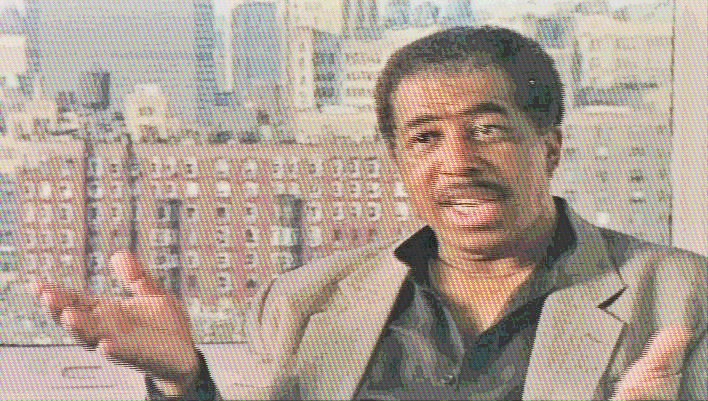
For readers in the UK the first episode of the 2015 BBC documentary series is temporarily available once more on BBC iplayer - but only until Monday 3 July, so hurry.
I couldn't say whether it's particularly innovative but it tells the story well and clearly, and has a poignancy not present in some earlier series by virtue of the fact that those involved are considerably older than in Tony Palmer's groundbreaking seventies series All You Need Is Love or even series of more recent vintage like Dancing in the Street.
Before providing a link to my original review of the episode allow me to draw your attention to a section around thirteen minutes in, featuring the Spaniels singing an acapella version of Goodnight Sweetheart, Goodnight and a rather too brief interview with their bass singer and current leader Billy Shelton.
I don't normally give any advance indication of when I'll be posting next but I've decided to make an exception in this rare case.
This is to say that in the space of a few weeks at most I hope to post an extended piece based upon a series of interviews with a veteran doo wop singer.
Because it's longer than normal, and aims to give a broad picture of his whole life, ordering the information has been trickier than usual. As when I was working with the comedian Freddie Davies on his autobiography, I'm discovering there's a limit to how effectively a longer narrative can be structured onscreen, so it's back to what I used to think of as The Pritt Stick Chronicles: printed sheets of the rough draft cut up into pieces and reassembled.
The process of writing has changed somewhat in recent months. In an earlier post, readable here, I described a pleasing morning routine which is now impossible. But I shall push on and hope that you, and my subject, will see the results soon.
As mentioned in the previous post, Brent Wilson contacted Ben E King for the doo wop documentary Streetlight Harmonies but the singer died before an interview could be set up.
It's a great pity, in more than one sense. Wilson seems to have taken considerable pains to gain the trust of the artists who took part, and even though contributions were heavily edited in the final version the raw footage must have been quite extensive if the case of Vito Picone of the Elegants is anything to go by. According to a virtual Q&A Picone was "in the chair" for a straight six hours before someone realised it might be time to break for a meal.
I have just watched Streetlight Harmonies, Brent Wilson's new documentary about doo wop, and it's well worth your attention whether you are an aficionado or merely, as it were, doo wop-curious. A little over eighty minutes, it provides a very clear overview of the era as well as some discussion about the genre's lasting influence. It may not be the first film dedicated to the subject but where it excels is in the deft editing of the testimony of a large number of interviewees, allowing the story of this music to be told almost entirely through the artists' own words. Charlie Horner, credited as historical consultant, makes an occasional appearance when context is needed and DJ Jerry Blavat ("The Geator with the Heater"), songwriter Jeff Barry and some others appear, although the vast majority of interviewees are group members (including some representatives of girl groups).
Interviews have been cut up and are spread throughout the film according to theme. The focus is on doo wop as a phenomenon and the experiences common to all those involved rather than having large sections dedicated to individual artists or groups. That might sound bitty but it isn't; the narrative flows very well. At the beginning we get an introductory segment about the form's gospel origins then we move to the Orioles and then - no, not to the Dominos, as a more detailed chronological approach might have taken us, but Frankie Lymon ... which is a bit of a jump, though it can certainly be justified as another major breakthrough.
Another story-in-song which made an impression on me as a child was The Son of Hickory Holler's Tramp, written by Dallas Frazier. Like Ruby, Don't Take Your Love to Town, the song had been a hit for Johnny Darrell on the US country charts in 1967, but I became aware of it via O.C. Smith's soulful interpretation, a greater success in Britain than America, the following year.
Listening to the opening chorus now, I'm aware of how quickly and efficiently the story is set up with a few telling details, preparing us for the fuller account to follow in the verses:
Having written about Honey in the previous post I'm now going to look at Ruby, Don't Take Your Love to Town by Kenny Rogers and the First Edition (above). There are some connections between the two numbers. Both are stories-in-song, much possessed by death, and whatever the pop/rock elements in their respective arrangements they are essentially country ballads, tales of woe.
But with one important difference - important, at least, to my childhood self. My elder brothers, ultimate arbiters in such matters, adjudged Ruby to be "cool" - or at least not "uncool", which amounted to the same thing. They didn't say so directly but I could tell because they withheld their mockery when Kenny Rogers appeared on our little TV screen, thereby granting permission for the song to be enjoyed, its sensational details savoured without embarrassment, by lowly younger siblings. Memory is cloudy but I don't think they extended the same privilege to Bobby Goldsboro's lament.
It's pretty clear why Ruby would have made the more favourable impact when my brothers and I first encountered the two songs on Top of the Pops. No string-laden backing, no cute Yuletide puppy, no fusty parlour song-type angels, only one of the putative Honky Tonky variety. Instead we found ourselves dropped straight into a film noir-type situation to freeze the blood, with talk of war, death, guns, maybe even murder: tailor-made for boys weaned on the Victor and those little Commando comics, as certain members of my household were.
Like all right-thinking people I follow Alwyn Turner's online series Revive 45 on the Lion and Unicorn website, and I urge the more malleable reader to go forth and do likewise. Once a month Mr Turner casts his eye over the top ten from forty five years ago, and the resulting mix of insight, original research (he's interviewed quite a few of the artists) and unashamed enthusiasm for hits long condemned as "uncool" by others has frequently been an ear-opener for me - and he knows how to turn the odd pleasing phrase too. The most recent post considers the charts from April 1975, including Bobby Goldsboro's oft-disparaged Honey (above).
Reading the piece has prompted me to listen to Goldsboro's record again and to look at the lyrics more closely. But before I get onto a more detailed examination I need to bring a certain hangup of mine into the open. The notional "coolnesss" or otherwise of certain records has often proven a hurdle to my fullhearted enjoyment of them, so I rather envy Mr Turner's lack of shame in that respect. I suppose it all goes back to my childhood ... childhood ... childhood ...
Update: Spencer Leigh's Could This Be Magic? has now been been published as an e-book and is available worldwide from UK amazon here and US amazon here.
This is to let readers know that the DJ and author Spencer Leigh has written a book about doo wop which will be published this Friday, 17th April.
The current crisis means that it will be issued initially in e-book form, although it's hoped a hard copy will be available later. I recently read an advance copy of the book, which is entitled Could It Be Magic?, and chatted to Spencer Leigh about it.
Those who have read an earlier post about Donovan's 1972 concert to raise funds for Upper Clyde Shipbuilders may be interested in a radio documentary which fills in more of the background to that event.
Entitled When the Eyes of the World Were on the Clyde, the programme was originally broadcast in 2011, not long after the death of Jimmy Reid, one of the prime movers in the story. He was the shop steward who, before the "work-in", famously said:
There will be no hooliganism. There will be no vandalism. There will be no bevvying ... because the world is watching us.
It was repeated today on BBC Radio 4 Extra, and as far as I can tell will remain available, for UK and US listeners alike, for at least a month - very possibly longer.
I provided some basic details in that earlier piece, drawing on a memoir by Jimmy Reid kindly provided by Doug Holton, but the opportunity to hear the voices of those directly involved in the struggle for survival, the rawness of their emotion and anger, undoubtedly gives the tale a far greater immediacy.
Some all-too-human details emerge during the programme. The story about John and Yoko donating a bouquet of roses along with financial support is corroborated - the sum is £1000 in this telling - although there is no word either way on whether the Lennons really attended the show in body. I've been listening to some old Lennon interviews which suggest he and Yoko gave financial support to any number of causes in those times, though the personal connection with Donovan means that his presence at Green's Playhouse that day can't be ruled out - unless a chronicler of Lennon's solo years with a Lewisohn-like tenacity can account for his movements on the afternoon of the 30th of April. (If you are out there, please get in touch.)
But that's just setting the scene. The detail which leapt out for me is that the ex-Beatle's flowers were not kept by UCS but given away to a local hospital. A lovely touch, you might think, but no: the female staff just couldn't agree among themselves about who was going to keep them.
*
Donovan has been on my mind over the past few weeks for reasons unconnected to the above. He was due to play a concert at London's Cadogan Hall in April, and despite the my reservations when seeing him perform in recent years, chronicled elsewhere in this blog, I went ahead and bought tickets, wanting to see him at least one last time - especially as it is approaching half a century since the Sunday afternoon of that UCS gig, my first ever rock performance - just as Donovan's early album Fairytale was the first LP I ever bought.
I kept revisiting the Cadogan website: concert after concert at the hall was officially cancelled but Donovan's show seemed to be hanging on, almost as though he still believed that asking the audience to clap their hands would be enough to make it stop raining. But it was eventually postponed for six months - and we can only hope that it will indeed happen then.
But in time-honoured news announcer fashion let's end on a happier note (UK readers of a certain age, please to picture the rictus grin of Alastair Burnet as he prepares to dangle the latest Royal titbit).
Those who have read some of the other Donovan posts (there are quite a few of them) may remember that after the disappointment of buying a lo-fi tape of the UCS concert - not to mention the experience of being berated by the bootlegger when I dared to complain - I cut out the middleman and made my own illicit cassette recording of a later Dono-gig at the same venue, by then renamed the Apollo.
In all probability the quality wasn't that much better than the shoddy souvenir of 1972 - but it was mine, and listening to the concert in my darkened bedroom through the warmth of a valve amplifier my memory was just about able to fill in the gaps.
And then, at some unspecified point, that precious cassette ... just ... disappeared.
(Actually, my father probably threw it out along with other items unwisely left behind in the family home, but that's not such a good story.)
What? No, I didn't suddenly unearth the tape yesterday, sounding an unlikely note of hope amidst the uncertainty which now faces us all, but - well, the next best thing, I suppose.
I found, on the Sugarmegs website, a fairly well recorded gig from around the same time, and recognised roughly the same order of songs, beginning with Operating Manual for Spaceship Earth, and going through quite a lot of the Essence to Essence album, only far more appealing in barebones form. He steadily plays quite a lot of new or newish material before making with the hits and it's a strong, assured performance.
My only regret is that no performance of There Is A Mountain has ever matched the one committed to my little cassette recorder that evening at the Apollo. In addition to the different stresses I have heard on various live renditions - "lock upon my garden gate's a snail" - he bursts into scatting. I have a feeling that this was earlier in the show than the one available online - possibly he felt he had to seize his home audience more firmly - and I've never heard it the same way since. "Nought happens twice thus", as Ramblin' Tom Hardy so rightly said.
*
Since writing the above yesterday, I have been idly searching for more Dono-stuff on youtube and discovered tracks from a tribute album to Harry Belafonte in, I think, 2019, therefore representing Donovan's voice pretty much as it is now.
Listening is an odd experience: strain is often apparent, but there is still something moving in the experience. Donovan has been part of my life for so long, and whatever the joshing in some of the pieces listed below he always will be.
Here's his take on Scarlet Ribbons. I've chosen it partly because it's less demanding vocally than some of the other selections but also because it describes a moment of simple magic. Or idiotic, irrational hope, if you will. You remember idiotic, irrational hope, dontcha?
When the Eyes of the World Were on the Clyde can be found here.
Other posts about Donovan - best read in chronological order:
I have just heard Adam Thorpe's 2003 radio play Nought Happens Thus Twice, about Thomas Hardy's second marriage, to Florence Dugdale.
There is no more plot than Long Day's Journey Into Night, say, or Sebastian Barry's The Steward of Christendom - in this case it's simply whether or not Florence will agree to accompany her husband on a jaunt - but it remains compelling throughout.
My friend late of North Berwick did not like this kind of play, an attitude I could never really understand. Okay, it's really no more than a camera slowly zooming in on its subjects, but what's wrong with that? It's certainly a difficult trick to pull off because as a writer you don't have the safety net of a plot for the audience to focus on to redeem the play if the dialogue happens to be less than stellar.
As is well known, Thomas Hardy's second marriage had its difficulties. In R.C. Sherriff's autobiography No Leading Lady the writer of Journey's End describes meetings with various literary lions after the success of his play, among them J.M. Barrie and Hardy. (The meeting with Barrie is at once hilarious and sad, but you will have to seek this highly entertaining memoir out for yourself.)
Florence was already Hardy's wife by the time Sherriff was being feted, and when she had a moment alone with the playwright she confided that she had been recently dragged along by Hardy to some muddy field in which he stood for an aeon in rapt contemplation because it evoked in him yet another memory of Wife Number One. Which is great for Hardy (and, indeed, for the world, because the best of his poems about Emma, written after her death, are very good indeed) but not so much so for the woman who is meant to have supplanted Emma in his affections.
Thorpe's play reminded me a little of the Maysles brothers' documentary Grey Gardens (which later became a musical) because we're likewise in the presence of two people who have been locked together for far too long, with no means of escape, and so there are cyclical recriminations, with nothing pushed to its resolution, because this is just one more day in purgatory and neither party is going to walk away. The outside world (the presence of the documentary makers in Grey Gardens, the invitation to see a film crew in Nought Happens Twice) maybe provides more of a focus than usual, but that's about it.
Still, you can't live at that kind of pitch 24 hours a day, and there are moments in the Hardy play when the couple seize on a distraction - the sighting of a grey squirrel as opposed to a red one - to provide respite, or maybe just to show that they do have things in common. There is even a kind of sitcom element - not that this is exactly a laff-o-rama - because it's the classic situation of two people being trapped together in a marriage or quasi-marriage, as with Steptoe and Son. And it may be remembered that Harold is capable of considerable verbal cruelty through the frustration of being trapped forever with his dad. His sarcastic or mocking words are a way of deluding himself that he has free will, but in that context they are no more powerful than that of a prisoner mocking his jailer - another sitcom premise. I am reminded, in fact, of a phrase used by Hardy in a poem about a prisoner and escort at a railway station: "grimful glee". So Florence talks of making a bonfire of Emma's things once Hardy is dead, but she, like Harold Steptoe, has a kind of special license. At the end of the play (spoiler alert) she does agree to visit the film crew - though the twist is that by that point, Hardy is reluctant, for fear that her obvious emotional state after all the conflicts they have been reheating will signal to onlookers that all is not well with the marriage.
It does help if you have some knowledge of Hardy, I suppose, to enjoy the play but it's not absolutely necessary. The piece's great strength is the teasing out of detail to provide an ever clearer impression of the enormous, unscaleable hole into which the two have toppled. It's just one more weary rehearsing of grievances (shades of yet another sitcom), upon which we happen to be eavesdropping.
Florence Dugdale had been a teacher in Enfield, and the poem from which the play's title is taken describes Hardy seeing her on a platform in Liverpool Street Station. Hardy watches her diminishing form as she goes down the platform towards the train - he's at the barrier - and, this presumably being the first youthful flush of their love, he laments that whatever future plans are made this moment, this feeling, will never return. Actually, why don't you read it for yourself here?
And while you're at it, why not read what Cecil Day-Lewis called "Hardy's great farewell to love", At Castel Boterel, here? The latter is a poem I love very much, along with After a Journey and I Found Her Out There - all of them about Emma, not Florence. And that grimfully gleeful sitcom pilot of a poem, more of a minor work, a snapshot, can be found here.
Update 16/8/21: Adam Thorpe's play, starring Patrick Malahide and Sylvestra Le Touzel and directed by Patrick Rayner, can be currently found on youtube here.