
To mark the 42nd anniversary of John Lennon's death, extracts from two earlier posts, both written in 2010. Links to the full versions can be found at the end.

To mark the 42nd anniversary of John Lennon's death, extracts from two earlier posts, both written in 2010. Links to the full versions can be found at the end.

It has now been confirmed that Jerry Lee Lewis has died.
There can't be any doubt that he was the last of the true greats from the golden age of rock'n'roll; I can still recall the excitement of first hearing Whole Lotta Shakin' Going On, different from the frenzy of Little Richard's recordings but every bit as potent. In The Sound of the City Charlie Gillett had especial praise for his ability to sing, as it were, in inverted commas, never wholly abandoned like Richard but "almost always" with "an edge of detachment or even cynical derision", as though not quite buying into this "love" business:
This detachment enabled Lewis to pace his records, and control his audiences at live performances, with a finesse few rock'n'roll singers showed. He would have needed only Chuck Berry's flair for writing songs to be a comparably important figure.

A few years ago I wrote a series of pieces about the radio broadcasters who had contributed the most to my musical education over the years. Not all of these figures were attached to the BBC, but most were; and to celebrate that institution's 100th anniversary I've condensed those memories into one handy single post - no strenuous clicking required.

The Jake Thackray biography having arrived, I couldn't resist devouring it immediately, even though it's the kind of work which ought to be savoured at leisure. What follows is more by way of a few initial thoughts than a comprehensive review, but based on my frantic run at the thing the good news is that the book is all that might have been hoped for and can be recommended without reservation to thoroughgoing Thackrayites and the Jake-curious alike.
Today marks 25 years since a play of mine about a pizza delivery man and his determinedly awkward customer was first performed. It was part of a writers' showcase based around food - the theatre producing it had recently moved to new premises in an area associated with eateries. The building's transformation from its previous use had not yet been completed, however, and perhaps because this event took place before the official opening there is little mention of it online. Which seems a pity to me - and I daresay five others might feel the same, though they will have to tell their own stories in their own doo wop-related blogs.

A biography of Jake Thackray, written with the cooperation of friends and family, is due to be published by Leeds-based company Scratching Shed this August. I don't think anyone will be disappointed.

I had despaired of ever seeing it but 14 Karat Soul's first ever TV appearance, on Saturday Night Live on January 24th, 1981, can now be viewed online at the Internet Archive website, which is cause for celebration if you care for this sort of thing.

For anyone who doesn't know, Matt the Cat's shows about the Flamingos in his Juke in the Back series are currently being repeated via his website and can be recommended: he plays most of their records and provides a potted version of their story along the way. At present it's Episode One, which covers the group's time on Art Sheridan's Chance Records, their first label (1953-1954);

When a young soap actor who originates a role is replaced does he or she have any legal recourse? That's the question posed in a new book, Outside Soap, by Charles Hamm, to be published tomorrow. The timing couldn't be better, as a case may soon be going to court: this week a former star has announced his intention to sue for loss of earnings, based on the number of years in which his successor played the role. And if the action is successful that may prove quite a tidy sum, so alarm bells must be ringing in the offices of television companies up and down the land.
For viewers of British soaps it's a familiar story: a young actor plays a character for ten or fifteen years, often right from the moment of his or her onscreen birth, only to be replaced by - well, not even a lookie-likey in many cases.
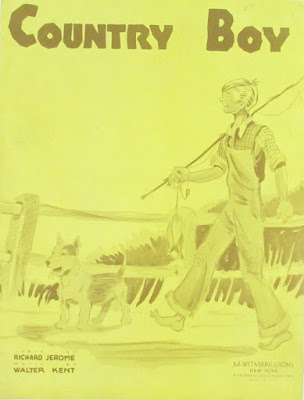
I've already paid tribute to Hubert Gregg but this footnote has become necessary because I've just discovered the details about a record he played on his radio show Thanks for the Memory which had been eluding me for - ohhh, only around the last four decades or so.

If you have read Robert Webb's memoir How Not to Be a Boy you may remember that the youthful Webb mentions an unlikely source of comedic inspiration: the mainstream sitcom No Place Like Home, which ran for five series on BBC1 in the 1980s.
It's about a middle-aged man, chagrined to find his grown-up children have taken up residence in the family home once again - a bit like Eric Chappell's Home to Roost, on around the same time - only more so, as this put-upon dad is lumbered with four kids and a wife. Not the most obvious sitcom, perhaps, to stir the blood of one who went on to star in a gloriously dark example of the genre but that's what seems to have set the seal on Webb's decision to become a performer.
Not that he offers an unqualified tribute to the ability of its writer, Jon Watkins.

I don't suppose it will be news to many of its former customers that the London bakery chain Percy Ingle's closed all its shops last year. But it certainly came as a shock to me when I made the discovery a few weeks ago.
Even though the local branch had been shut ever since the first lockdown it didn't occur to me that this might be the end. Call it denial, arrant stupidity, or what you will, but I think I'd vaguely assumed that they were waiting for the final all-clear, reluctant to go head to head with the more widely known rival depicted above, or, I dunno, maybe one of the assistants had got covid or the family-run company was reluctant to put staff at risk, or ...
In my defence, although the shop had been shuttered there had been no other indication that anything might be afoot, no sign of building work or the interior being stripped or anything - until, that is, one morning a comparatively trendy eaterie was suddenly there in its stead. Which led me to search out the articles online and read the sad details about this situation.

My one and only foray into karaoke (literally "empty glutton", unless I'm thinking of something else) occurred a few Christmases ago, on a Scottish island blessed with several pubs. My companion and I were visiting our friend, whom I'll call Ronaldo; he was working in one of those establishments, and on the first night of our stay we went there - not to sing but to do a recce.
I have to admit that I had come to scoff - or at least, that's what I presumed would be the outcome of my visit. Blessed, or cursed, with a certain amount of knowledge about popular music, and being, furthermore, in possession of two elder brothers, the idea of what is and is not cool, musically speaking, is lodged firmly in the Pismotalitian brain, permitting of no deviation.
Anyway, that first night we perched at the bar, stopping occasionally to listen to what was, in youthful parlance, "going down". Did I splutter into my beer at some of the punters' efforts assailing our ears? Did I then fall to the ground, clutching my stomach while crying out, again and again: "No more! Oh, in God's name, no more!"?

Three months on from the previous posting I hereby declare my "wee phrase" of buying up old cassettes from a well-known auction website exhausted. Not that this means I'm any nearer a conclusion about the wisdom of re-embracing this ancient medium. If I could be said to have embraced it: an air-peck-on-the-cheek, if anything. Even though I must have bought around a dozen I've only listened to a few.
Why the reluctance? Two reasons, one more fanciful than the other.

